What Are the Signs of an Electrical Problem in a Car?
Common signs of a car electrical problem include a battery that repeatedly dies, a vehicle that will not start, flickering lights, multiple dashboard warnings, blown fuses, power windows or locks that stop working, intermittent accessories, burning electrical smells, and problems that appear only after rain or cold starts.
The difficult part is that one electrical fault can create several different symptoms.
A damaged ground connection may affect starting, lighting and vehicle computers. Low system voltage may trigger warning lights in systems that are otherwise working correctly. A broken wire may cause a feature to work normally one day and fail the next.
That is why modern auto electrical diagnosis is less about guessing which part is bad and more about following the symptoms back through the circuit.
Here are 15 signs that your vehicle may have an electrical problem—and what each symptom can tell you.
1. Your Battery Keeps Dying
A battery that goes dead once may simply be old or discharged.
A battery that keeps dying is different.
If you install a new battery, drive normally, and find the vehicle dead again the next morning or several days later, another problem may be draining or failing to replenish the battery.
Possible causes include:
- Parasitic electrical draw
- Light staying on after the vehicle is parked
- Relay remaining energized
- Electronic module that does not enter sleep mode
- Charging-system problem
- Poor battery connection
- Damaged wiring
- Aftermarket electrical equipment
- Faulty door, trunk or hood switch
- Poor ground connection
One of the biggest mistakes drivers make is repeatedly replacing the battery without determining why it is losing power.
If your vehicle repeatedly loses its charge while parked, read our guide to why a car battery keeps dying overnight.
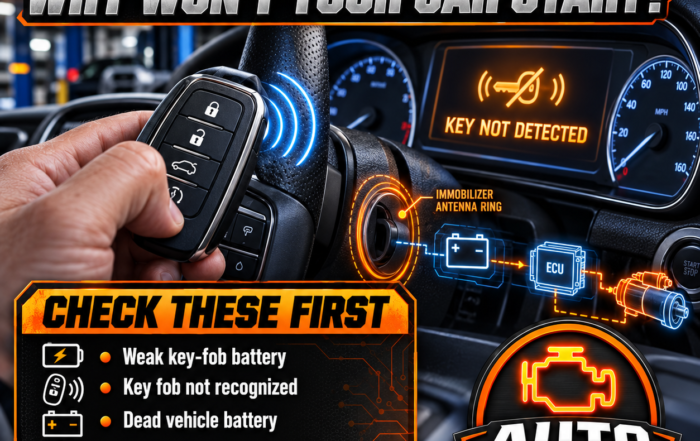
2. Your Car Won’t Start
A no-start problem is one of the clearest signs that the electrical system may need attention, but the exact symptom matters.
There is an important difference between:
No crank: You turn the key or press the start button and the engine does not turn.
Cranks but won’t start: The engine turns normally but never begins running.
A no-crank condition may involve:
- Battery
- Battery cables
- Grounds
- Starter circuit
- Relays
- Fuses
- Ignition switch
- Brake or clutch switches
- Security system
- Wiring
- Control modules
If the dashboard and interior lights still work but the engine does nothing, that does not rule out an electrical problem. Lights require far less current than the starter.
Our guide to why a car won’t start even though the lights work explains how clicking, silence, dimming lights and other symptoms can help narrow down the problem.
3. Your Car Starts Sometimes and Not Others
Intermittent starting problems are particularly important electrical clues.
A vehicle may start normally for days and then suddenly produce:
- One click
- Rapid clicking
- Complete silence
- Slow cranking
- Dashboard power but no engine response
Then, a few minutes later, it may start perfectly.
Problems that come and go can involve:
- Loose connections
- Damaged wiring
- Poor grounds
- Relays
- Ignition circuits
- Security-system communication
- Temperature-sensitive components
- Module communication problems
When this happens, record the conditions.
Does it fail when cold? After the vehicle warms up? After rain? After sitting overnight? Only after driving?
Those details can be extremely useful during diagnosis.
4. Several Dashboard Warning Lights Come On at Once
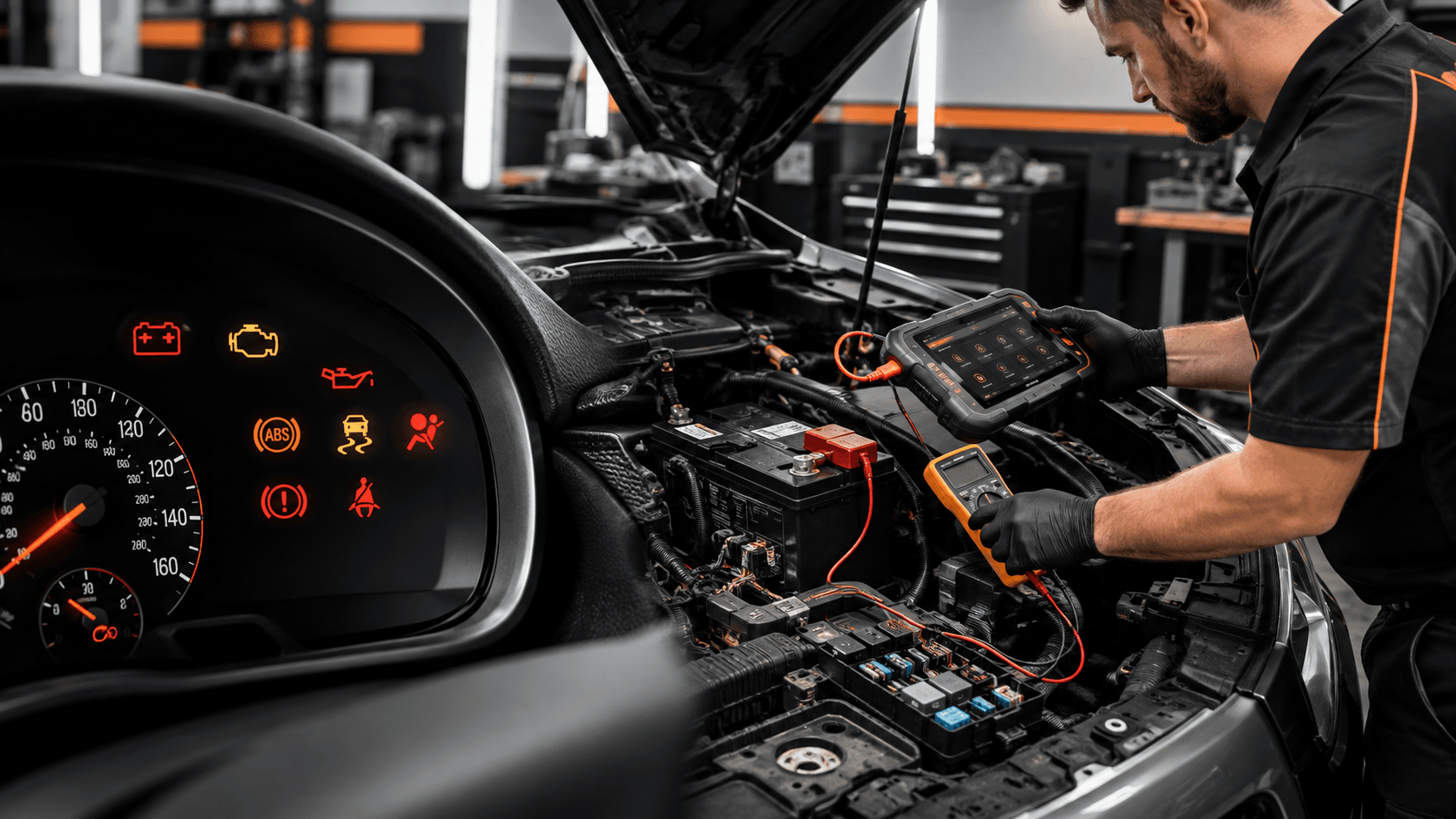
Seeing the check engine, ABS, traction-control, power steering and other warning lights appear together can make it seem as though several systems failed simultaneously.
Sometimes there are multiple faults.
But modern vehicles also use shared:
- Power supplies
- Grounds
- Sensors
- Wiring
- Communication networks
One failure in a shared circuit can cause multiple modules to report problems.
For example, low or unstable voltage can cause several computers to temporarily lose communication or generate fault codes.
Possible causes of multiple warning lights include:
- Weak or discharged battery
- Charging-system problem
- Poor ground
- Loose electrical connection
- Damaged wiring
- Failed sensor used by multiple systems
- Module communication problem
- Water intrusion
If your dashboard suddenly looks like a Christmas tree, our detailed guide explains why multiple dashboard warning lights can come on at the same time.
5. Your Dashboard or Headlights Flicker
Lights that flicker, pulse, dim or change brightness can indicate unstable electrical power.
This may involve:
- Battery condition
- Charging system
- Loose battery terminal
- Ground connection
- Wiring
- Electrical connector
- Lighting circuit
- Control module
Pay attention to when the flickering happens.
Does it happen:
- At idle?
- When accelerating?
- When turning on the AC?
- When operating a power window?
- While driving over bumps?
- Only after rain?
- During startup?
The timing may reveal whether the problem changes with electrical load, vibration or moisture.
Persistent exterior-lighting electrical problems may require vehicle lighting electrical diagnostics.
6. A Fuse Keeps Blowing
A fuse is designed to protect an electrical circuit.
When excessive current flows through that circuit, the fuse opens and stops the flow of electricity.
Replacing a blown fuse once may restore the feature. If the same fuse blows again, the underlying fault remains.
Possible causes include:
- Shorted wiring
- Damaged insulation
- Failed electrical motor
- Water inside a connector
- Shorted component
- Incorrect aftermarket wiring
- Overloaded circuit
- Damaged relay
- Electrical module fault
The timing can help.
A fuse that blows immediately may have a different cause from one that blows only when the power window moves or headlights are switched on.
Most importantly, never install a higher-amperage fuse simply to stop it from blowing. The correct fuse rating protects the wiring and components.
Read our full guide if your car fuse keeps blowing.
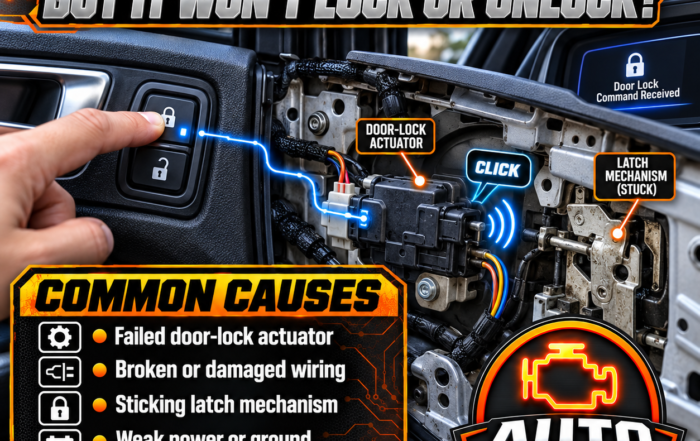
7. Your Power Windows or Door Locks Stop Working
Power windows and door locks are common places for electrical problems to appear.
A power window that stops moving does not automatically mean the window motor has failed.
The problem may involve:
- Window motor
- Window regulator
- Window switch
- Master window switch
- Door lock actuator
- Door wiring
- Connector
- Fuse
- Ground
- Door module
- Body Control Module
The pattern matters.
If one window stops working, the problem may be isolated to that door.
If all windows stop working, a shared fuse, master switch, power supply or control system becomes more important.
If the window works when the door is in one position but stops when the door moves, wiring through the door jamb may need inspection.
Our power window and door lock electrical repair page explains these systems in more detail.
8. Electrical Features Work Only Sometimes
Intermittent electrical problems are one of the strongest signs of a connection or circuit issue.
You might notice:
- Radio randomly restarts
- Window occasionally stops responding
- Door lock works some days but not others
- Headlight flickers
- Warning light appears and disappears
- Power seat stops and later works again
- Wipers behave unpredictably
- Vehicle starts only after several attempts
Electrical circuits can respond differently to:
- Temperature
- Moisture
- Vibration
- Vehicle movement
- Electrical load
- Door movement
- Connector position
A completely failed component may be easier to identify than one that fails only occasionally.
Do not assume an intermittent problem is unimportant simply because the feature started working again.
9. Electrical Problems Appear After Rain or a Car Wash
A problem that consistently appears after rain is valuable diagnostic information.
Moisture can expose weaknesses involving:
- Damaged wire insulation
- Corroded connectors
- Door wiring
- Ground connections
- Fuse boxes
- Sensors
- Modules
- Exterior lighting
- Aftermarket wiring
Symptoms may include:
- Vehicle will not start
- Battery drains
- Warning lights appear
- Windows or locks stop working
- Exterior lights malfunction
- Fuse blows
- Module communication codes appear
The vehicle may return to normal after drying, but the underlying weakness can still remain.
If weather clearly affects the problem, our guide to car electrical problems after rain explains why moisture and damaged connections can create intermittent faults.
10. Your Battery Warning Light Comes On While Driving
The battery-shaped warning light does not necessarily mean the battery itself needs replacement.
It generally indicates a concern involving the vehicle’s charging or electrical system.
Possible causes can include:
- Charging-system fault
- Electrical connection problem
- Battery cable issue
- Ground problem
- Wiring problem
- Voltage irregularity
If the charging system cannot maintain the electrical system while the engine is running, the vehicle may eventually begin losing electronic functions.
You might see:
- Battery warning light
- Dimming headlights
- Radio shutting off
- Steering warning
- Multiple dashboard lights
- Vehicle eventually shutting down
A battery warning that appears while driving should receive prompt attention.
11. Your Interior or Exterior Lights Stay On
A light that remains on after the vehicle is parked may seem minor, but it can become an important clue when the battery keeps dying.
Possible causes include:
- Door switch
- Door latch sensor
- Trunk switch
- Hood switch
- Lighting control
- Wiring
- Relay
- Body Control Module
Sometimes the light is obvious.
Other times it may be inside:
- Glove box
- Trunk
- Vanity mirror
- Cargo area
- Door
- Underhood area
Modern vehicles may also keep certain systems active for a period after shutdown, so diagnosing battery drain is not simply a matter of pulling random fuses immediately after turning the vehicle off.
12. You Smell Burning Plastic or Electrical Insulation
A burning electrical smell deserves immediate attention.
Possible sources can include:
- Overheated wiring
- Shorted electrical component
- Melted connector
- Motor drawing excessive current
- Damaged fuse or relay socket
- Incorrect aftermarket wiring
If you see smoke or suspect wiring is overheating, safely stop using the vehicle and have the problem evaluated.
Do not continue replacing fuses or operating the affected accessory if the circuit is overheating.
A smell of hot electrical insulation can indicate a problem that should be addressed before additional wiring or components are damaged.
13. Your Vehicle Has Strange Problems After Battery Replacement
Replacing a battery should not normally cause long-term electrical problems, but symptoms that begin immediately afterward can provide clues.
You may notice:
- Multiple warning lights
- No-start condition
- Windows or locks acting differently
- Security warning
- Lost electronic settings
- Communication codes
- Electrical features not responding
Possible causes can include:
- Loose terminal
- Poor cable connection
- Ground connection problem
- Low-voltage codes stored before replacement
- System requiring relearn or initialization
- Existing electrical fault that killed the previous battery
A new battery also does not prove the charging system or the rest of the electrical system is healthy.
If the new battery keeps dying, further testing is usually more useful than installing another battery.
14. Your Car Has Electrical Problems After Previous Repairs
Electrical symptoms that begin after another repair should be mentioned when the vehicle is diagnosed.
This does not automatically mean the previous repair was performed incorrectly.
But recent work can help narrow the search.
Potential issues can involve:
- Connector not fully seated
- Harness pinched during reassembly
- Ground not reconnected properly
- Wire damaged during body repair
- Aftermarket radio or alarm wiring
- Door wiring disturbed during speaker or window work
- Module disconnected
- Wrong replacement component
For example, a blind spot warning beginning immediately after bumper repair may deserve a different diagnostic approach than a warning that appeared randomly months later.
The timeline matters.
15. Multiple Unrelated Features Stop Working
This is one of the most important electrical patterns to recognize.
Imagine the vehicle suddenly develops:
- Power windows not working
- Interior lights behaving strangely
- Door locks failing
- Security warning
- Battery drain
- Key fob problems
Those may appear to be six different failures.
But they may also share a common system.
Body-related electrical features can communicate through the Body Control Module (BCM) and associated wiring, power supplies and networks.
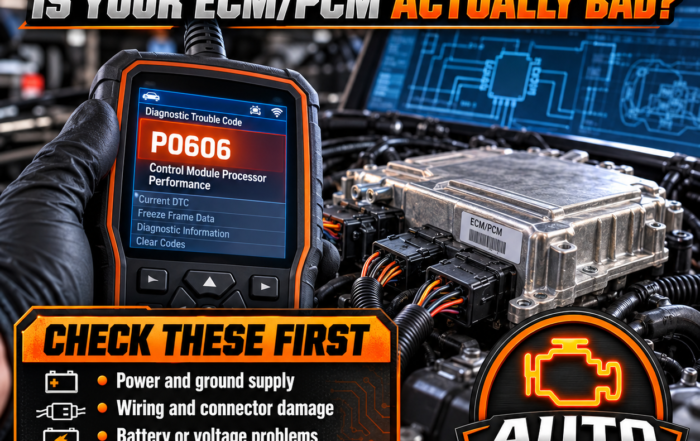
Similarly, engine-related systems may share information through the ECU or ECM.
A module-related fault code does not automatically mean the computer itself failed.
Before replacing an expensive control module, diagnosis may need to confirm:
- Module power
- Ground
- Wiring
- Connector condition
- Communication network
- Related sensors and switches
If several body-electrical features fail together, BCM diagnostics and repair may become part of the diagnostic process.
What Causes Electrical Problems in Cars?
Automotive electrical problems can come from many different sources, but most fall into several broad categories.
Low or Unstable Voltage
Modern vehicle electronics require a stable electrical supply.
Low voltage may cause:
- Warning lights
- Communication faults
- Modules restarting
- Slow starting
- Electronic features becoming unavailable
Damaged Wiring
Wiring can be affected by:
- Age
- Heat
- Vibration
- Collision damage
- Rodents
- Water
- Previous repairs
- Repeated door or trunk movement
If damaged wires, corroded connectors, poor grounds, or electrical shorts are causing the problem, our car wiring repair in Milwaukee service focuses on tracing the affected circuit and repairing the underlying fault.
Poor Grounds
An electrical circuit must have a complete path.
A poor ground may affect one system or several systems simultaneously.
Corrosion
Corrosion can increase electrical resistance and interfere with power, ground or communication circuits.
Failed Electrical Components
Motors, switches, relays, sensors, actuators and other components can fail internally.
Control Module or Network Problems
Modern vehicles contain numerous computers that exchange information.
A communication fault can cause warnings and system failures even when the mechanical component itself is functioning.
How Do You Tell Whether a Car Problem Is Electrical or Mechanical?
Sometimes the distinction is obvious.
Other times, electrical and mechanical problems create nearly identical symptoms.
A power window that will not move could have:
- Failed electrical motor
- Broken regulator
- Damaged wiring
- Failed switch
A car that will not start could have:
- Battery problem
- Starter-circuit problem
- Security issue
- Sensor problem
- Fuel problem
- Mechanical engine problem
A warning light may result from:
- Failed sensor
- Wiring fault
- Actual mechanical problem the sensor detected
That is why diagnosis should begin with the symptom and test results rather than deciding in advance that the problem is electrical or mechanical.
What Can a Car Electrical Diagnostic Test Find?
Electrical diagnosis may include much more than plugging in a scanner.
Depending on the problem, testing can include:
- Reading diagnostic trouble codes
- Reviewing live vehicle data
- Checking battery and system voltage
- Testing power and ground
- Measuring voltage drop
- Inspecting connectors
- Testing wiring continuity
- Checking relays and fuses
- Evaluating sensor signals
- Checking module communication
- Reproducing intermittent symptoms
A scanner can identify useful information, but a trouble code does not always identify the failed part.
Our guide explaining what a car diagnostic test checks goes deeper into the difference between reading codes and actually diagnosing a vehicle.
Does a Trouble Code Mean the Part Is Bad?
Not necessarily.
This is one of the most important facts for drivers to understand about modern diagnostics.
Suppose a code identifies a sensor circuit.
Possible causes may include:
- Failed sensor
- Broken wire
- Short circuit
- Loose connector
- Corroded terminal
- Missing reference voltage
- Poor ground
- Control-module issue
The code tells you what condition the computer detected.
Testing determines why that condition occurred.
That is why simply buying whichever part appears in a code description can lead to unnecessary repairs.
Why Electrical Problems Can Be Difficult to Diagnose
Electrical faults are often more difficult when they are intermittent.
A vehicle may operate perfectly when it arrives at the shop.
The problem may occur only:
- First thing in the morning
- After sitting overnight
- During freezing weather
- After rain
- When the engine gets hot
- While driving over bumps
- When a door is opened
- With several accessories operating
- Once every few days
That is why information from the driver is valuable.
Instead of saying only “the car acts weird,” describe exactly what happened.
For example:
“The driver’s window stops working after it rains but starts working again the next day.”
or:
“The battery is dead only when the vehicle sits for two days.”
Those details give the technician a condition to investigate.
Electrical Problems Milwaukee Drivers May Notice More During Weather Changes
Milwaukee vehicles experience cold starts, snow, rain, moisture and large seasonal temperature changes.
Those conditions do not mean every electrical problem is caused by Wisconsin weather, but they can make an existing weakness more noticeable.
Cold conditions may expose a weak battery or poor electrical connection.
Moisture may affect an already damaged connector or wiring harness.
Corrosion around electrical terminals and grounds can create resistance that produces intermittent symptoms.
This is especially important when a problem follows a pattern such as:
- Vehicle does not start on cold mornings
- Electrical feature fails after rain
- Warning lights appear during winter startup
- Battery repeatedly loses power after sitting
- Problem disappears after vehicle warms up
Recording that pattern can make diagnosis more efficient.
Can You Diagnose an Electrical Problem Without a Warning Light?
Yes.
Many electrical problems do not immediately produce a dashboard warning.
Examples include:
- Power window failure
- Power door lock problem
- Power seat malfunction
- Headlight issue
- Battery drain
- Intermittent no-start
- Fuse repeatedly blowing
- Door wiring fault
Warning lights are only one source of information.
Your symptoms are just as important.
Should You Replace the Battery First?
Only when testing indicates the battery is bad or there is a clear reason to replace it.
A battery is often blamed because many electrical problems eventually produce a dead battery.
But the battery may be the result of the problem rather than the cause.
For example, a module staying awake overnight can discharge a perfectly good battery.
Installing a new battery may make the vehicle work normally for several days, but the same drain can eventually discharge the replacement battery too.
Can a Bad BCM Cause Random Electrical Problems?
It can, depending on the vehicle and systems involved.
The BCM may control or communicate with:
- Door locks
- Power windows
- Interior lighting
- Exterior lighting
- Security system
- Keyless entry
- Wipers
- Other body accessories
But a BCM code does not automatically prove the BCM is internally bad.
Low voltage, damaged wiring, missing power, poor ground or a communication problem can make a healthy module appear faulty.
Testing the supporting circuits first can prevent unnecessary module replacement.
When Is an Electrical Problem an Emergency?
Some electrical problems are inconvenient.
Others can affect vehicle safety.
Seek prompt assistance if you notice:
- Smoke
- Burning electrical smell
- Wiring becoming hot
- Repeated fuse failure involving a safety system
- Vehicle losing electrical power while driving
- Headlights failing at night
- Brake-system warnings
- Steering assistance suddenly unavailable
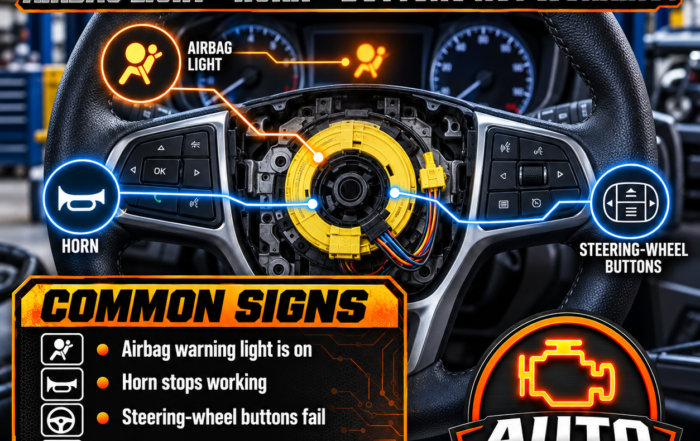
- Serious airbag or SRS faults
- Vehicle repeatedly shutting off
If the vehicle cannot be safely controlled or driven, do not continue driving simply to reach a repair facility.
Where Can Milwaukee Drivers Get Auto Electrical Problems Diagnosed?
Auto Electrical & Airbag Specialist performs vehicle electrical diagnostics at our Milwaukee facility:
2636 S 32nd St
Milwaukee, WI 53215
We diagnose problems involving:
- Wiring and connectors
- Power and grounds
- No-start conditions
- Battery drains
- Warning lights
- Electrical accessories
- Fuses and relays
- Sensors
- ECU, ECM and BCM systems
- Airbag and SRS electronics
- Power steering electronics
- Blind spot systems
- Vehicle lighting
Electrical diagnostics start at $135. The amount of testing required depends on the vehicle, the affected system and whether the problem is constant or intermittent.
Drivers who already know they need testing can learn more about our auto electrical diagnostics and repair in Milwaukee.
Frequently Asked Questions About Car Electrical Problems
What is the most common sign of an electrical problem in a car?
There is no single symptom that proves a vehicle has an electrical fault. Common signs include repeated dead batteries, starting problems, flickering lights, multiple warning lights, blown fuses and accessories that work intermittently.
Can a bad battery cause random electrical problems?
Yes. Low or unstable voltage can cause electronic systems and control modules to behave abnormally. However, the battery should be tested rather than assumed to be responsible for every electrical symptom.
Why does my car have electrical problems only sometimes?
Intermittent electrical problems can be caused by loose connections, damaged wiring, corrosion, poor grounds, relays, switches or electronic modules. Temperature, vibration, moisture and electrical load can affect when the problem appears.
Can one electrical problem cause multiple warning lights?
Yes. Vehicle systems often share power, grounds, sensors and communication networks. A problem affecting a shared circuit can cause several modules to report faults simultaneously.
Why does my new battery keep dying?
A new battery can be discharged by a parasitic electrical draw, charging-system problem, light staying on, stuck relay, aftermarket equipment, wiring fault or electronic module that remains active while the vehicle is parked.
Can a car electrical problem happen without a check engine light?
Yes. Problems involving windows, locks, lighting, battery drain, wiring, power seats, starting circuits and other electrical systems may occur without turning on the check engine light.
Does a diagnostic code tell you what part to replace?
Not always. A diagnostic trouble code identifies a condition detected by the vehicle computer. Wiring, connectors, voltage, grounds and other components may need to be tested before the failed part can be confirmed.
How much does auto electrical diagnostics cost in Milwaukee?
At Auto Electrical & Airbag Specialist in Milwaukee, electrical diagnostic testing starts at $135. More complex or intermittent electrical faults may require additional diagnostic time.
The Best Clue Is Often the Pattern
Electrical problems rarely become easier to diagnose by replacing random parts.
Instead, pay attention to the pattern.
Does the vehicle fail after sitting overnight?
Does the warning appear only when it rains?
Does a window work only when the door is positioned a certain way?
Do several dashboard warnings appear during startup?
Did the problem begin after the battery was replaced or another repair was completed?
Those details help separate a battery problem from a wiring problem, a failed component from a poor connection, and an actual module failure from a power or communication issue.
If your vehicle has an electrical problem that keeps returning, the next step should be to determine where the electrical system stops working correctly and why—before more parts are replaced.