Red, Yellow and Green Dashboard Lights: What Do They Mean?
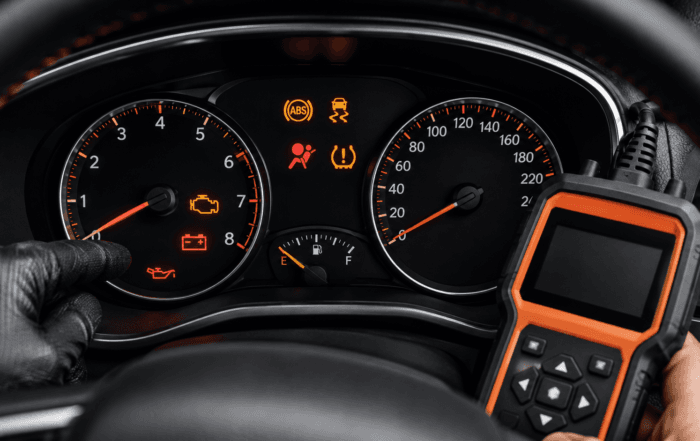
Your dashboard uses warning lights to tell you what is happening inside your vehicle. Some simply show that a feature is turned on, while others warn that the vehicle has detected a problem.
The color is usually the first clue about how seriously you should take the warning.
Red dashboard lights generally need the most immediate attention. Depending on the symbol, you may need to stop driving as soon as it is safe.
Yellow or amber dashboard lights usually mean the vehicle has detected a problem that should be checked soon. The car may still drive normally, but the warning should not simply be ignored.
Green dashboard lights normally show that a feature is operating, such as headlights, cruise control or another active system.
Blue dashboard lights are commonly used for features such as high-beam headlights.
The exact symbols and colors vary between manufacturers, so your owner’s manual should always be checked when you do not recognize a light.
More importantly, a warning light usually tells you which system detected a problem — not necessarily which part needs to be replaced. Sensors, wiring, connectors, voltage problems and electronic control modules can all trigger dashboard warnings.
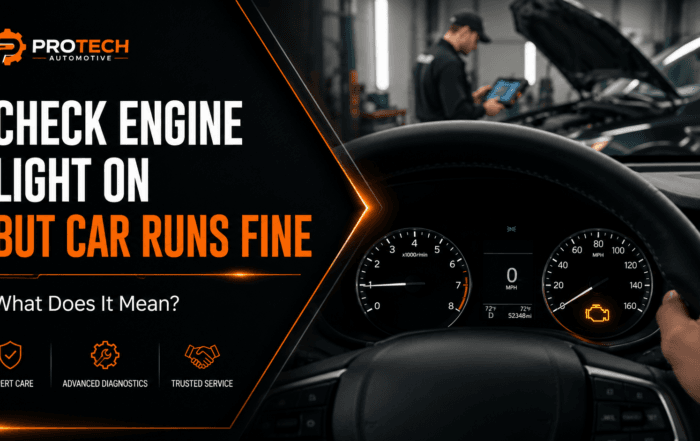
Check Engine Light
The check engine light is one of the most common dashboard warnings.
A solid check engine light means the vehicle’s engine-control system has detected a fault and stored a diagnostic trouble code. The cause can range from a relatively simple problem to an electrical, sensor, wiring or engine-control issue.
Possible causes include:
- Sensor or sensor-circuit problems
- Damaged wiring
- Loose or corroded connectors
- Engine-control faults
- Low or unstable voltage
- Communication problems between vehicle modules
- Ignition or fuel-system problems
- Emissions-related faults
A common mistake is assuming the trouble code tells you exactly which part is bad. It does not always work that way.
For example, a sensor-related code could be caused by the sensor itself, damaged wiring leading to the sensor, missing voltage, a poor ground or a connector problem.
If the check engine light keeps returning, appears with other warning lights or is accompanied by unusual electrical symptoms, auto electrical diagnostics and repair can help determine what is actually causing the fault.
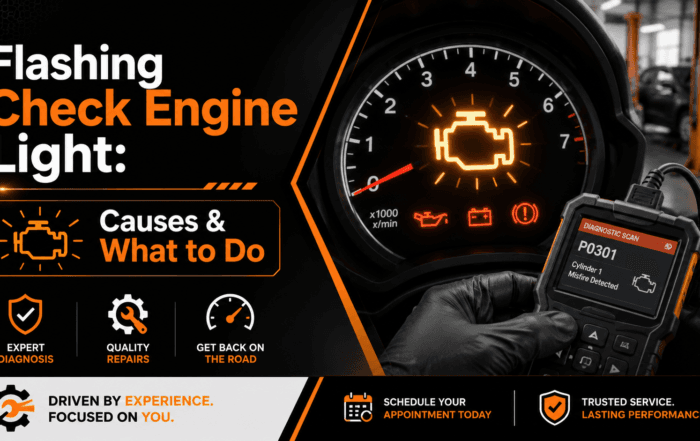
What Does a Flashing Check Engine Light Mean?
A flashing or blinking check engine light should be treated more seriously than a solid light.
It can indicate a condition severe enough to potentially damage the vehicle if driving continues. Reduce unnecessary driving and have the vehicle evaluated as soon as possible.
If the vehicle is shaking, losing power, running extremely rough or showing other serious symptoms, continuing to drive may not be appropriate.
Battery Warning Light
The battery-shaped dashboard light does not automatically mean you need a new battery.
It generally means the vehicle has detected a problem involving the charging or electrical system.
Possible causes include:
- Charging-system problems
- Poor battery connections
- Loose or corroded terminals
- Wiring problems
- Voltage issues
- Ground problems
- Battery-related faults
- Electrical connection failures
If the battery light comes on while driving, the vehicle may eventually lose electrical power if the charging system is no longer keeping the battery charged.
You might also notice:
- Headlights becoming dim
- Interior lights flickering
- Multiple dashboard warnings appearing
- Power accessories behaving strangely
- Steering or other electronic systems displaying warnings
- The vehicle eventually shutting off
This is also why several dashboard lights appearing at once can sometimes have a common electrical cause rather than several unrelated failures.
Oil Pressure Warning Light
The oil pressure warning usually looks like a small oil can.
This warning deserves immediate attention because inadequate oil pressure can prevent the engine from receiving the lubrication it needs.
If the oil pressure warning remains illuminated while the engine is running, safely stop the vehicle and turn the engine off.
A warning can sometimes involve the oil pressure sensor or its electrical circuit, but you should never assume it is only a sensor problem without confirming that the engine actually has proper oil pressure.
Driving an engine with genuinely low oil pressure can cause major engine damage.
Engine Temperature Warning Light
The engine temperature warning generally indicates that the engine is overheating or that the cooling system has detected an unsafe temperature.
If a red temperature warning appears or the temperature gauge enters the hot zone, find a safe place to stop the vehicle.
Potential causes may involve the cooling system itself, although temperature sensors, wiring, connectors and electronically controlled cooling components can also produce faults.
Do not open a hot cooling system. Pressurized coolant can cause serious burns.
Brake Warning Light
The brake warning light is usually red and is different from the ABS warning.
A brake warning can appear because:
- The parking brake is engaged
- Brake fluid is low
- The braking system has detected a fault
- A brake-related sensor has detected a problem
- An electrical circuit associated with the braking system has failed
If the parking brake is completely released and the brake warning remains on, have the vehicle inspected.
If the brake pedal feels different, stopping performance changes or both the brake and ABS warnings are illuminated, the problem should receive prompt attention.
Our Milwaukee shop also provides brake services and ABS diagnostics when warning lights are related to the braking system.
ABS Warning Light
ABS stands for Anti-lock Braking System.
The system is designed to help prevent wheel lockup during hard braking. When the ABS light stays illuminated, the vehicle has detected a fault within that system.
Possible causes may include:
- Wheel-speed sensors
- Damaged sensor wiring
- Electrical connectors
- ABS control-module faults
- Damaged circuits
- Communication problems
- Low or unstable voltage
The vehicle’s normal brakes may still work when the ABS warning is illuminated, but the anti-lock function may not operate properly.
An ABS light appearing together with a red brake warning deserves additional attention.
Airbag Warning Light
The airbag warning light often looks like a seated person with a circle in front of them.
Other vehicles may display messages such as:
- AIRBAG
- SERVICE AIRBAG
- SRS
- RESTRAINT SYSTEM
When the airbag warning stays on, the vehicle has detected a fault within the restraint system.
Possible causes can include:
- Airbag sensors
- Seat-related sensors
- Wiring and connectors
- Clock spring faults
- Seat belt pretensioner problems
- SRS control-module problems
- Power or ground faults
- Previous collision-related issues
Simply clearing the warning does not repair the underlying fault.
If the airbag warning stays illuminated, airbag repair and diagnostics can identify whether the problem involves a sensor, circuit, connector, module or another part of the restraint system.
SRS Warning Light
SRS stands for Supplemental Restraint System.
Depending on the manufacturer, an SRS warning may refer to the same general system represented by the airbag warning light.
The SRS system can involve:
- Airbags
- Crash sensors
- Seat belt pretensioners
- Occupancy sensors
- Wiring and connectors
- Control modules
- Power and ground circuits
A stored SRS fault code gives a technician a place to begin testing, but it does not always prove which component has failed.
If your vehicle displays an SRS warning, our SRS diagnostics and repair service focuses on identifying the actual source of the fault.
Power Steering Warning Light
A power steering warning may appear as a steering-wheel symbol, an exclamation point or a message such as Power Steering Assist Fault.
Many modern vehicles use electric power steering rather than a traditional hydraulic system.
Possible causes can involve:
- Power steering control modules
- Steering sensors
- Wiring
- Electrical connectors
- Low system voltage
- Communication faults
- Electric steering components
You may also notice that the steering suddenly feels heavier or that assist becomes intermittent.
Electrical testing is especially important because a steering warning does not automatically mean the steering module itself has failed.
Learn more about power steering module repair and diagnostics when the warning involves an electronically controlled steering system.
Traction Control Warning Light
The traction control light may show a vehicle with wavy lines underneath it.
There are two situations to understand.
If the light flashes briefly while driving on a slippery surface, the system may simply be operating normally.
If the warning stays on continuously, the vehicle may have detected a fault.
Traction and stability-control systems often depend on information from:
- Wheel-speed sensors
- Steering-angle sensors
- Brake-system electronics
- Engine-control systems
- ABS components
- Vehicle communication networks
This is why traction-control and ABS lights sometimes appear together.
Electronic Stability Control Warning
Electronic Stability Control may be labeled ESC, ESP or by another manufacturer-specific name.
The system helps the driver maintain control when the vehicle begins to lose traction.
A warning that stays illuminated may indicate a problem involving sensors, wheel-speed information, steering input, braking electronics or communication between control modules.
If the ABS, traction-control and stability-control lights all appear at once, the vehicle may have one shared fault affecting several systems rather than three completely separate problems.
Tire Pressure Warning Light
The tire pressure monitoring system light usually looks like a tire with an exclamation point.
The first thing to do is check the tire pressures.
Possible reasons for the warning include:
- One or more tires are underinflated
- Temperature changes lowered tire pressure
- A tire has a leak
- A TPMS sensor has failed
- The system has lost communication with a sensor
If the symbol flashes before staying on, some vehicles use that pattern to indicate a monitoring-system fault rather than simply low tire pressure.
Never rely only on the dashboard light if a tire visibly looks low.
Blind Spot Monitoring Warning
Modern vehicles may display messages such as:
- Blind Spot Monitor Unavailable
- Blind Spot System Malfunction
- Check Blind Spot Monitor
- Blind Spot Alert Unavailable
- Side Detection System Unavailable
The blind spot system relies on sensors, wiring, connectors, control modules and communication with other vehicle electronics.
A warning may be caused by a temporarily blocked sensor, but persistent warnings can also involve electrical or electronic faults.
When the system remains unavailable after normal driving conditions return, blind spot monitoring diagnostics and repair may be needed.
Lighting Warning Lights
Some vehicles monitor exterior lighting and display a dashboard warning when they detect a problem.
This may involve:
- Headlights
- Brake lights
- Taillights
- Turn signals
- Daytime running lights
- License-plate lights
- Adaptive headlights
Sometimes the problem is simply a failed bulb. Other times, especially on newer vehicles, the fault can involve wiring, connectors, control modules or electronic lighting circuits.
If lights flicker, remain on when they should be off or repeatedly stop working, the problem may require vehicle lighting electrical diagnostics rather than simply replacing another bulb.
What Does the Triangle With an Exclamation Point Mean?
A triangle containing an exclamation point is often called the master warning light.
Unfortunately, it does not have one universal meaning.
Depending on the vehicle, it may appear with another dashboard message that explains the problem.
For example, it could accompany:
- Low tire pressure
- Driver-assistance faults
- Lighting problems
- Maintenance warnings
- Stability-control issues
- Electrical-system alerts
Check the information display on the dashboard for an accompanying message and consult the owner’s manual for the vehicle-specific meaning.
Why Did All My Dashboard Warning Lights Come On at Once?
Seeing five or six warning lights appear at the same time can make it seem like half the vehicle suddenly failed.
Sometimes several separate faults do occur, but multiple warnings can also share one underlying cause.
Possible electrical causes include:
- Low battery voltage
- Charging-system problems
- Poor grounds
- Loose battery connections
- Damaged wiring
- Communication-network faults
- A module losing power
- Sensor information being lost
- Water or moisture affecting electrical connections
Modern vehicles contain numerous computers that communicate with one another. If voltage becomes unstable or one important communication circuit fails, several systems may report faults at the same time.
That is why replacing every component named by every code can become expensive very quickly.
The smarter approach is to determine whether the warnings share a common electrical cause.
Why Did Dashboard Lights Appear After Replacing the Battery?
It is possible for warning lights to appear after battery replacement or after the battery has been disconnected.
Depending on the vehicle, this can happen because:
- System voltage dropped during the battery failure
- Stored low-voltage codes remain in memory
- A system needs to relearn or recalibrate
- A connection is loose
- A terminal or ground has poor contact
- An unrelated fault became noticeable at the same time
Some warnings may clear after normal operation, while others indicate a fault that still needs attention.
If numerous warning lights remain after a battery replacement, check the battery connections and charging system before assuming several vehicle systems failed simultaneously.
Can a Weak Battery Cause Dashboard Warning Lights?
Yes.
Modern vehicle electronics depend on stable voltage. A weak battery, poor connection or charging-system problem can sometimes cause electronic systems to behave unpredictably.
Low voltage may contribute to:
- ABS warnings
- Power steering warnings
- Airbag or SRS codes
- Communication errors
- Check engine codes
- Traction-control warnings
- Multiple lights appearing simultaneously
This does not mean every dashboard warning is caused by the battery. It means system voltage is one of the things that should be considered when several unrelated electronic warnings appear together.
Can Wiring Problems Cause Dashboard Warning Lights?
Absolutely.
Wiring connects sensors, switches, modules and components throughout the vehicle. Damage anywhere along that circuit can prevent a system from receiving the signal, voltage or ground it expects.
Common wiring-related causes include:
- Broken wires
- Short circuits
- Open circuits
- Corrosion
- Loose terminals
- Damaged connectors
- Poor grounds
- Rodent damage
- Water intrusion
- Previous wiring repairs
Electrical problems can also be intermittent. A wire may lose connection only when the vehicle vibrates, gets wet or reaches a certain temperature.
That is one reason intermittent dashboard warnings can take more testing to diagnose.
Can I Keep Driving With a Dashboard Warning Light On?
It depends entirely on the light and the symptoms.
A green indicator showing that your headlights are on is obviously different from a red oil-pressure warning.
As a general rule, stop driving and investigate immediately if you see warnings involving:
- Oil pressure
- Severe overheating
- Braking problems
- A flashing check engine light accompanied by severe running problems
- A major loss of steering assistance
- Any condition that makes the vehicle unsafe to control
Yellow warnings often allow you enough time to arrange an inspection, but they should still be diagnosed rather than ignored indefinitely.
When unsure, consult your owner’s manual or have the vehicle checked.
Why Clearing a Dashboard Warning Light Is Not the Same as Repairing It
A scan tool can sometimes erase a stored trouble code and temporarily turn off a warning light.
That does not mean the problem has been fixed.
If the vehicle detects the same fault again, the light can return.
This is especially common when:
- A sensor circuit still has damaged wiring
- A connector remains loose
- Voltage continues dropping
- An electrical short remains in the circuit
- A module continues losing communication
- The underlying mechanical fault still exists
Diagnostic testing should determine why the code was created, not simply make the light disappear.
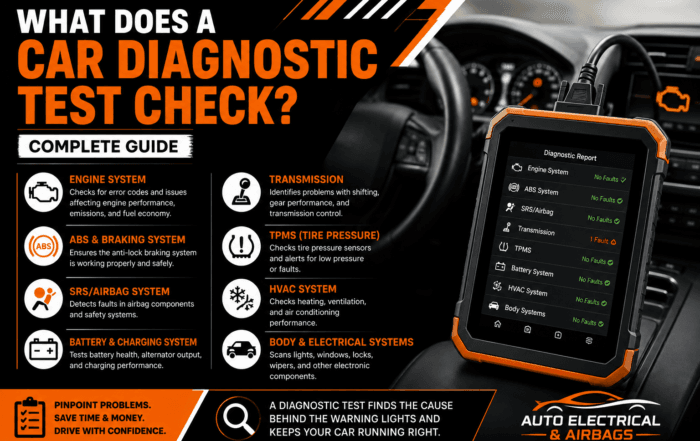
What Happens During Dashboard Warning Light Diagnostics?
The process depends on the warning and vehicle, but electrical testing may include:
- Reading stored and pending diagnostic trouble codes.
- Reviewing live sensor and vehicle data.
- Checking battery and charging voltage.
- Testing power and ground circuits.
- Inspecting wiring and connectors.
- Testing related sensors and switches.
- Checking communication between electronic control modules.
- Comparing the test results with the symptoms the driver experienced.
The purpose is to narrow down the affected circuit and determine what actually needs repair.
Auto electrical diagnostics at our Milwaukee facility start at $135. Our guide to auto electrical diagnostic costs in Milwaukee explains why some electrical problems require more testing time than others.
When Should You Get Dashboard Warning Lights Diagnosed?
Consider having the vehicle diagnosed when:
- A warning light stays on
- The same light keeps returning
- Several warnings appear simultaneously
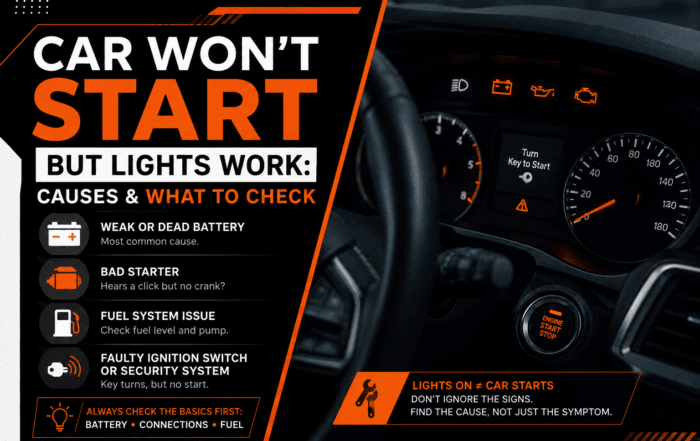
- A warning appears with starting or battery problems
- Electrical accessories also stop working
- A warning returns after a part was replaced
- The vehicle behaves differently when the light appears
- A safety-system warning remains active
- You do not know what the warning means
The important thing is not to guess based only on the symbol.
A dashboard warning is the vehicle telling you that a system noticed something abnormal. Proper diagnostics can determine whether the cause is a sensor, wiring fault, voltage problem, connector, electronic module, mechanical issue or another component before unnecessary parts are replaced.