Understanding Your Vehicle’s ECU, ECM, and BCM
Modern vehicles are not just mechanical machines anymore. They are controlled by electrical systems, sensors, wiring, and computer modules that communicate with one another constantly. When something goes wrong, the problem may not be obvious from the outside.
A warning light, no-start issue, power window problem, lighting failure, stalling concern, or security system issue may all point back to one of the vehicle’s control modules. Three terms drivers often hear are ECU, ECM, and BCM.
These terms can be confusing because they sound similar, and sometimes people use them interchangeably. But they do not always mean the same thing.
This guide explains what ECU, ECM, and BCM mean, what each module may control, symptoms of module-related problems, and why proper auto electrical diagnostics are important before replacing any car computer.
Quick Explanation: ECU vs ECM vs BCM
Here is the simple version:
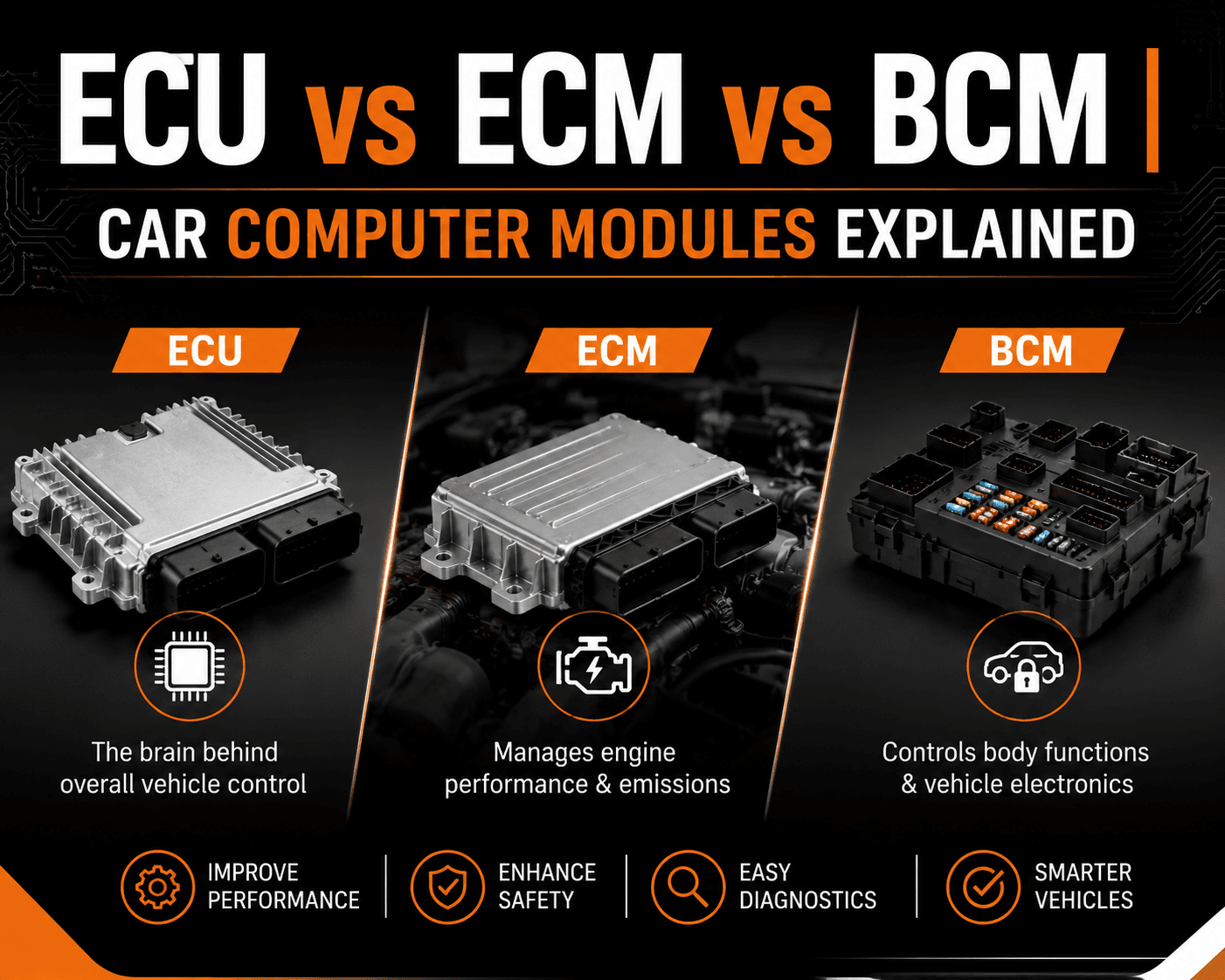
- ECU usually means Engine Control Unit or Electronic Control Unit.
- ECM means Engine Control Module.
- BCM means Body Control Module.
In some vehicles, ECU and ECM are used to describe similar engine computer functions. In other cases, ECU may be used as a broader term for a vehicle computer or control unit.
The BCM is different because it usually controls body-related electrical features instead of engine performance.
What Is an ECU?
ECU can stand for Engine Control Unit or Electronic Control Unit, depending on the vehicle and how the term is being used.
In many conversations, people use ECU to describe the main engine computer. In a broader sense, a vehicle can have many electronic control units that manage different systems.
An ECU may be involved with:
- Engine operation
- Fuel delivery
- Ignition timing
- Sensor communication
- Emissions-related controls
- Throttle control
- Starting functions
- Warning lights
- Communication with other modules
If your vehicle has ECU-related issues, you may see symptoms like:
- Check engine light
- No-start condition
- Crank but no start
- Poor acceleration
- Stalling
- Rough running
- Sensor fault codes
- Communication codes
- Engine performance problems
- Failed emissions readiness
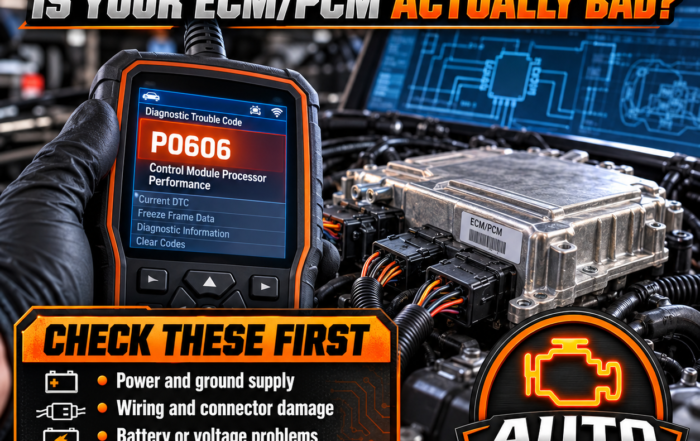
However, an ECU code does not automatically mean the ECU itself is bad. Wiring, sensors, grounds, relays, connectors, and power supply problems can all look like ECU issues.
That is why testing matters before replacing the computer. Our ECU repair in Milwaukee page explains more about engine computer-related concerns.
What Is an ECM?
ECM stands for Engine Control Module. It is usually responsible for controlling and monitoring engine-related functions.
The ECM may use information from sensors to help manage:
- Fuel injection
- Ignition timing
- Air/fuel mixture
- Idle control
- Throttle response
- Engine temperature input
- Emissions systems
- Sensor signals
- Engine performance
- Communication with other modules
When the ECM has a problem, the vehicle may not run correctly. But just like with the ECU, ECM symptoms can be caused by other electrical problems.
Possible ECM-related symptoms include:
- Engine cranks but does not start
- Engine stalls
- Engine runs rough
- Check engine light stays on
- Poor fuel economy
- Reduced power mode
- Sensor codes keep returning
- No communication with scan tool
- Engine misfire-like symptoms
- Vehicle starts sometimes but not always
Before assuming the ECM is bad, a technician should check:
- Power supply
- Grounds
- Fuses
- Relays
- Wiring
- Connectors
- Sensor inputs
- Communication network
- Water damage or corrosion
- Previous repair history
If your vehicle has engine computer symptoms, our ECM repair in Milwaukee page covers related issues in more detail.
What Is a BCM?
BCM stands for Body Control Module. The BCM usually controls or communicates with many body-related electrical features in the vehicle.
The BCM may be involved with:
- Power locks
- Power windows
- Interior lights
- Exterior lights
- Wipers
- Security system
- Keyless entry
- Remote start communication
- Alarm functions
- Door modules
- Dashboard warnings
- Some accessory functions
- Communication between other modules
BCM issues can be confusing because they often affect several unrelated systems at the same time.
A BCM problem may cause symptoms such as:
- Power windows not working
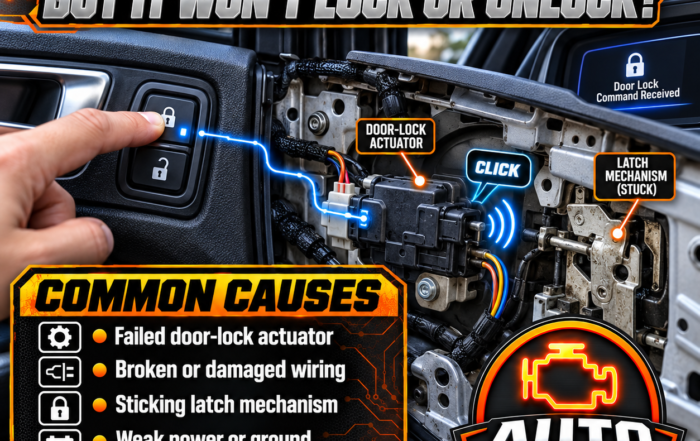
- Door locks acting strangely
- Interior lights staying on
- Exterior lights not working correctly
- Wipers not responding
- Security light staying on
- Key fob not working
- No-start or no-crank condition
- Battery drain
- Multiple warning lights
- Random electrical behavior
- Communication faults
For example, a driver may think they only have a door lock problem, but the issue could involve the BCM, wiring, door module, switch, actuator, or connector. Our BCM repair in Milwaukee page explains more about body control module problems.
Why These Modules Matter So Much
ECU, ECM, and BCM modules are important because they help different parts of the vehicle work together.
Modern vehicles depend on module communication. A problem in one area can affect another system. That is why a single electrical fault may create multiple symptoms.
For example:
- A BCM issue may cause lighting and door lock problems.
- An ECM issue may cause stalling or no-start symptoms.
- An ECU communication issue may cause warning lights.
- A wiring fault may make a good module look bad.
- A bad ground may affect several modules at once.
- Low voltage may trigger codes in multiple systems.
This is why car computer problems should be diagnosed carefully. The module may be the issue, but it is not always the first part that should be replaced.
Common Symptoms of Module Problems
Module-related problems can show up in many ways. Some symptoms point toward engine control, while others point toward body electronics or communication faults.
Common warning signs include:
- Car will not start
- Engine cranks but does not start
- Check engine light stays on
- Multiple warning lights appear
- No communication with scan tool
- Power windows stop working
- Door locks act strangely
- Lights flicker or stay on
- Battery keeps dying
- Security light stays on
- Key fob does not work
- Vehicle stalls
- Reduced power mode appears
- Dashboard behaves strangely
- Random electrical problems come and go
If multiple systems are acting up at the same time, the issue may involve wiring, voltage, grounds, communication, or a control module.
A Module Code Does Not Always Mean the Module Is Bad
This is one of the most important things to understand. A scan tool may show a code related to the ECU, ECM, BCM, or another module, but that does not automatically mean the module needs to be replaced.
A module-related code can be caused by:
- Low battery voltage
- Weak power supply
- Bad ground
- Blown fuse
- Failed relay
- Damaged wiring
- Loose connector
- Corrosion
- Water damage
- Sensor fault
- Communication network issue
- Programming issue
- Previous incorrect repair
- Aftermarket alarm or remote start wiring
Replacing a module without testing can be expensive. It can also fail to fix the problem if the real issue is wiring, power, ground, or communication.
How Wiring Problems Can Look Like Module Failure
Wiring is one of the biggest reasons module problems can be misdiagnosed. A module needs proper power, ground, and communication to work correctly. If any of those are missing or unstable, the module may appear to fail even if it is still good.
Wiring-related issues may include:
- Broken wires
- Short circuits
- Open circuits
- Loose terminals
- Corroded connectors
- Water-damaged wiring
- Rodent damage
- Poor grounds
- Damaged harnesses
- Previous repair mistakes
A wiring issue may cause:
- Intermittent no-start
- Random warning lights
- Module communication codes
- Flickering lights
- Power window failure
- Battery drain
- Sensor codes
- Systems working sometimes but not always
This is why electrical diagnostics should usually come before replacing major modules.
ECU and ECM Problems: Engine-Related Symptoms
ECU and ECM issues are usually more connected to engine operation. If the engine computer cannot process information correctly or communicate with other systems, the vehicle may run poorly or fail to start.
Possible ECU or ECM symptoms include:
- No-start condition
- Crank but no start
- Stalling while driving
- Rough idle
- Poor acceleration
- Reduced engine power
- Check engine light
- Sensor fault codes
- Communication errors
- Fuel or ignition control issues
- No scan tool communication
But these same symptoms may also come from:
- Crankshaft position sensor
- Camshaft position sensor
- Fuel pump relay
- Ignition switch
- Wiring harness
- Battery voltage issue
- Bad ground
- Blown fuse
- Corroded connector
- Security system fault
That is why ECU and ECM problems need more than a quick code scan.
BCM Problems: Body Electrical Symptoms
BCM problems usually show up in body-related systems. These are the features drivers use every day, so BCM symptoms can be very noticeable.
A BCM-related issue may affect:
- Power door locks
- Power windows
- Headlights
- Taillights
- Interior lights
- Wipers
- Alarm system
- Keyless entry
- Door switches
- Dashboard indicators
- Security system
- Battery drain
For example, if your interior lights stay on, door locks stop working, and the battery keeps dying, the issue may involve the BCM or the wiring connected to it.
Related pages that may help include:
Can ECU, ECM, or BCM Problems Cause a No-Start?
Yes, module problems can sometimes cause a vehicle not to start. But again, the module is not always the cause.
A no-start issue may involve:
- ECU or ECM not powering up
- BCM security authorization problem
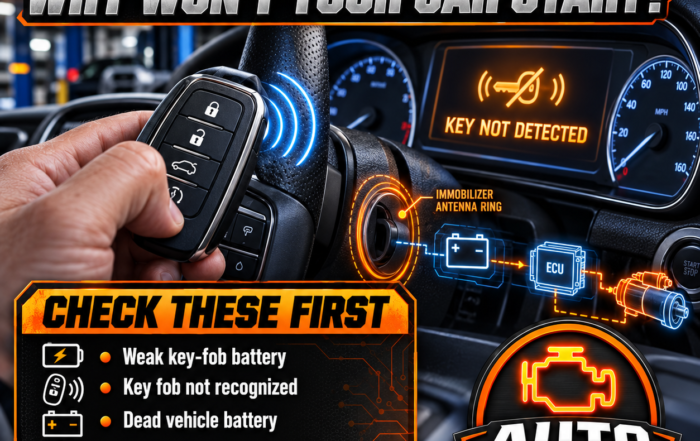
- Immobilizer issue
- Key not recognized
- Communication failure between modules
- Starter relay not being commanded
- Fuel system not being activated
- Sensor information missing
- Blown fuse or relay problem
- Power or ground issue
A no-start condition can be complicated because the vehicle may require several systems to agree before it starts.
For example, the vehicle may need signals from:
- Key or push-start system
- Security system
- BCM
- ECU or ECM
- Transmission range sensor
- Brake pedal switch
- Starter relay
- Fuel system
- Ignition system
If one signal is missing, the vehicle may not start.
Can Module Problems Cause Battery Drain?
Yes. A module that does not go to sleep properly can sometimes drain the battery while the vehicle is off.
Battery drain may happen if:
- A module stays awake
- Interior lights stay on
- A relay sticks
- Door switches misread open/closed position
- BCM does not power down correctly
- Aftermarket wiring keeps a circuit active
- Communication network remains active
- A component draws power when it should not
Symptoms may include:
- Battery dead overnight
- Battery dead after sitting a few days
- Vehicle starts after jump but dies again later
- Interior lights behave strangely
- Doors, locks, or accessories act unusual
- Repeated battery replacements do not solve the issue
A battery drain problem should be tested carefully because replacing the battery may not fix the real cause.
Why Programming and Compatibility Matter
Some modules are not plug-and-play. Depending on the vehicle, an ECU, ECM, BCM, or other control module may require programming, coding, calibration, or matching to the vehicle.
This matters because:
- Used modules may not work without programming.
- Incorrect modules may create more codes.
- Security systems may reject a replacement module.
- Some modules must match the VIN.
- Some systems need relearn procedures.
- Some repairs require scan tool setup.
This is another reason diagnostics should happen before replacement. The wrong module can waste money and still leave the vehicle with the same problem.
Questions to Ask Before Replacing a Module
Before replacing an ECU, ECM, BCM, or other control module, ask:
- Has power and ground been tested?
- Were fuses and relays checked?
- Are the fault codes current or stored?
- Is the module communicating?
- Are there wiring or connector problems?
- Is there water damage or corrosion?
- Did the issue start after a battery problem?
- Did the issue start after collision repair?
- Did the issue start after aftermarket wiring?
- Does the replacement module need programming?
- Could another sensor or circuit be causing the code?
These questions can help prevent unnecessary module replacement.
Why Diagnostics Should Come First
Replacing modules without diagnostics can get expensive. Vehicle computers are not parts you want to guess on.
Proper diagnostics may include:
- Scanning fault codes
- Checking module communication
- Testing power and ground
- Inspecting fuses and relays
- Testing wiring and connectors
- Looking for corrosion or water damage
- Checking sensor inputs
- Reviewing related warning lights
- Testing communication networks
- Confirming whether the module is actually the cause
The goal is to understand why the problem is happening before deciding what part needs repair or replacement.
When Milwaukee Drivers Should Schedule Electrical Diagnostics
You should consider diagnostics if your vehicle has:
- No-start issues
- Multiple warning lights
- Repeated battery drain
- Module communication codes
- ECU, ECM, or BCM fault codes
- Security light problems
- Random electrical issues
- Power windows or locks not working
- Lighting problems
- Intermittent stalling
- No scan tool communication
- Electrical issues after a collision
- Electrical issues after water damage
- Problems after battery replacement
If the symptoms involve engine control, the issue may relate to the ECU or ECM. If the symptoms involve lights, locks, windows, security, or body electronics, the issue may relate to the BCM. If several systems are affected, the problem may be wiring, communication, voltage, or multiple modules.
Final Thoughts
ECU, ECM, and BCM problems can be confusing because they often share symptoms with wiring faults, sensor failures, bad grounds, low voltage, and communication issues.
The simple difference is:
- ECU is often used for engine or electronic control functions.
- ECM usually refers to the engine control module.
- BCM usually controls body-related electrical features.
But the most important point is this: a module code does not always mean the module is bad. Before replacing expensive vehicle computers, the system should be tested.
For more information, visit:
- ECU Repair in Milwaukee
- ECM Repair in Milwaukee
- BCM Repair in Milwaukee
- Auto Electrical Diagnostics in Milwaukee
For questions about a module issue, warning light, no-start problem, or electrical concern, contact Auto Electrical & Airbags at (414) 345-7568.