What Rain-Related Vehicle Electrical Problems Usually Mean
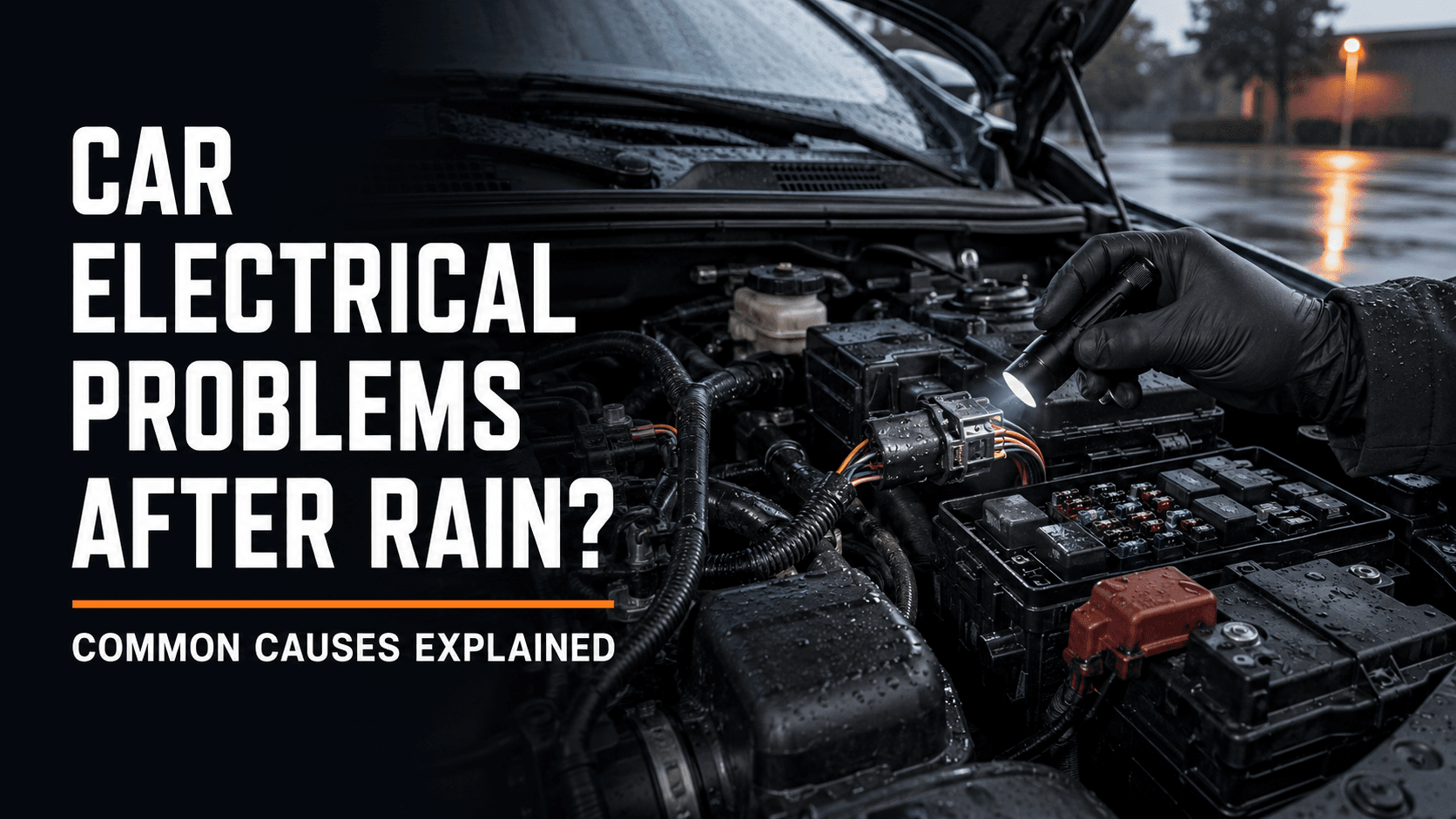
A vehicle that operates normally in dry weather but develops electrical problems after rain, snow or a car wash may have moisture entering an electrical circuit.
The problem may begin with something minor, such as a power window that works intermittently or a dashboard warning that disappears after the vehicle dries. In other cases, the vehicle may not start, several warning lights may appear together or an electronic system may become completely unavailable.
Water does not need to flood the entire vehicle to create an electrical problem. A small amount of moisture inside a connector can interrupt a signal, increase resistance or begin corroding the metal terminals. Water may also travel along wiring and collect far away from the point where it first entered.
Common rain-related electrical symptoms include:
- Multiple dashboard warning lights
- Intermittent no-start conditions
- A battery that becomes discharged
- Flickering exterior or interior lights
- Power windows or door locks that stop responding
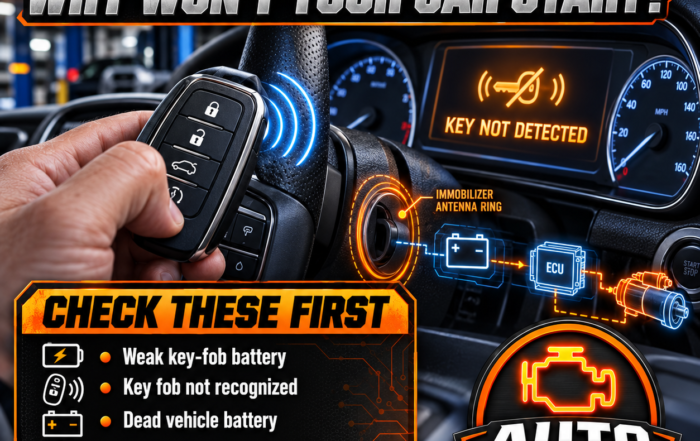
- Keyless-entry or security-system problems
- A radio or dashboard screen that restarts
- A blower motor that works only occasionally
- ABS, traction-control or airbag warnings
- A module that cannot communicate with diagnostic equipment
- Fuses that blow after rain
- Electrical problems that disappear after the vehicle dries
The symptom alone does not identify where the water entered. Diagnosing the problem usually requires finding which circuit is affected and tracing the moisture, corrosion or damaged connection responsible for the failure.
Why Water Causes Vehicle Electrical Problems
Automotive electrical circuits rely on clean metal contact between wires, terminals, connectors, switches and electronic components.
When water enters a circuit, it can interfere with that connection in several ways.
Water Can Create an Unintended Electrical Path
Electrical current is supposed to travel through a specific circuit. Moisture containing dirt, salt or other contaminants may allow current to travel between terminals that should remain separated.
This can cause:
- Short circuits
- Blown fuses
- Incorrect sensor signals
- Unexpected system activation
- Warning lights
- Module communication problems
- Battery drain
The problem may happen only while the connector is wet and temporarily disappear when it dries.
Moisture Can Increase Electrical Resistance
A wet or corroded connection may not create a complete short. Instead, it can restrict the amount of current reaching a component.
This may cause the system to:
- Operate slowly
- Work intermittently
- Restart unexpectedly
- Lose communication
- Fail only under heavier electrical demand
- Work in dry weather but fail after rain
A basic visual inspection may not reveal resistance hidden inside a sealed connector or beneath wire insulation.
Water Can Begin Corrosion
Corrosion may continue developing after the visible water is gone. Metal terminals can develop green, white or dark residue that interferes with electrical contact.
Over time, corrosion may:
- Weaken terminal contact
- Damage connector pins
- Travel beneath wire insulation
- Increase circuit resistance
- Create intermittent faults
- Cause wires to break internally
- Damage a vehicle control module
This is why a rain-related problem may become more frequent even when the vehicle is currently dry.
Common Places Water Enters a Vehicle
Water may reach electrical systems through several areas. The source is not always directly above the failed component because water can follow body seams, wiring harnesses and interior panels.
Damaged Door Seals
A worn or incorrectly positioned door seal may allow water into the door or passenger compartment.
Vehicle doors are designed to handle some water, but moisture should drain through designated openings. Problems may develop when:
- Drain holes become blocked
- A vapor barrier is damaged
- A door seal is torn
- Previous door work disturbed the seal
- Water reaches switches or connectors
- The door wiring harness has damaged insulation
Symptoms may include intermittent windows, locks, mirrors, speakers or interior lights.
Our guide explaining why power windows and door locks stop working covers additional problems involving door motors, switches, wiring and body-control circuits.
Windshield or Cowl Leaks
Water can enter near the windshield, cowl or firewall and reach wiring behind the dashboard.
A windshield leak may affect:
- Fuse boxes
- Dashboard wiring
- Body control modules
- Blower motors
- Climate-control electronics
- Airbag connectors
- Instrument panels
- Interior lighting circuits
The visible water may collect on the floor even though the electrical fault is higher inside the dashboard.
Sunroof Drain Problems
Vehicles with sunroofs commonly use drain tubes to route water away from the roof opening.
If a drain becomes clogged, disconnected or damaged, water may enter:
- The headliner
- A-pillar trim
- Kick panels
- Floor carpeting
- Wiring channels
- Interior fuse boxes
- Control-module areas
Wet carpeting should not be ignored because wiring and electronic modules may be located beneath the floor or seats.
Exterior Light Housings
Headlights and taillights are designed to resist moisture, but damaged seals or cracked housings may allow water inside.
Possible symptoms include:
- Flickering lights
- A bulb that repeatedly fails
- Corroded sockets
- Blown lighting fuses
- Turn signals operating incorrectly
- Warning messages about exterior lighting
- Several lamps failing together
Our vehicle lighting electrical repair page explains electrical problems involving lighting wiring, grounds, switches, sockets and control modules.
Engine-Compartment Connectors
Engine-compartment wiring is exposed to water, heat, vibration and road contaminants. Connectors have seals, but those seals can become damaged or displaced.
Moisture may reach:
- Sensors
- Fuse and relay boxes
- Engine wiring harnesses
- Ground connections
- Charging-system wiring
- Electronic control modules
- Cooling-fan circuits
- Ignition components
Problems may become worse after driving through heavy rain, deep water or road spray.
Trunk and Cargo-Area Leaks
Water may enter through taillight seals, trunk seals, body vents or damaged seams.
Depending on the vehicle, the cargo area may contain:
- Battery connections
- Fuse panels
- Amplifiers
- Parking-assistance modules
- Blind-spot monitoring modules
- Body control electronics
- Rear lighting connectors
Water near these components can create symptoms that appear unrelated to the trunk leak.
Car Will Not Start After Rain
A vehicle that will not start after rain may have moisture affecting the starting, ignition, security or engine-management system.
The exact behavior is important.
The Vehicle Has Power but Does Not Crank
When the dashboard and interior lights work but the engine does not crank, possible causes include:
- Wet starter-control wiring
- Moisture inside a relay or fuse box
- Corroded battery or ground connection
- Ignition-switch circuit problem
- Security-system fault
- Transmission-position signal problem
- Module communication failure
- Connector affected by water
The problem is not automatically the starter.
The Engine Cranks but Does Not Start
When the engine turns over normally but does not run, moisture may be affecting:
- Ignition components
- Engine sensors
- ECU or ECM wiring
- Security authorization
- Fuel-control circuits
- Engine grounds
- Communication between modules
A fault that appears only after rain may help narrow the inspection toward exposed connectors, wiring or previously repaired areas.
The guide Car Won’t Start: Could It Be an Electrical Problem? explains the differences between no-crank, crank-no-start and intermittent starting conditions.
Battery Dies After Rain or a Car Wash
Water intrusion can contribute to a discharged battery when it causes a circuit to remain active after the vehicle is turned off.
Examples include:
- Interior lights remaining on
- A door module staying awake
- A wet switch sending an incorrect signal
- A relay remaining engaged
- A security system repeatedly activating
- A body control module failing to enter sleep mode
- Moisture bridging terminals inside a connector
- An aftermarket accessory reacting to water
A battery may also become discharged because corrosion or moisture is preventing the charging system from operating correctly.
Repeatedly replacing the battery will not correct an electrical draw or charging-circuit problem. Our guide to why a car battery keeps dying overnight explains how lights, relays, accessories and modules can continue drawing power after shutdown.
Multiple Dashboard Warning Lights After Rain
Several warning lights may appear together when moisture affects a shared power supply, ground or communication circuit.
For example, a wet connector or corroded ground may affect the ABS module, power steering system, body control module and engine computer at the same time.
The dashboard may display:
- ABS warning
- Traction-control warning
- Stability-control warning
- Power steering warning
- Airbag or SRS light
- Check-engine light
- Battery warning
- Security-system message
- Driver-assistance unavailable message
- Communication warnings
The vehicle does not necessarily have a separate failed part for every warning.
One low-voltage, grounding or network problem can cause several modules to store faults. The pattern of codes and which modules remain available can help identify the shared cause.
For a broader explanation, read why multiple dashboard warning lights can come on at the same time.
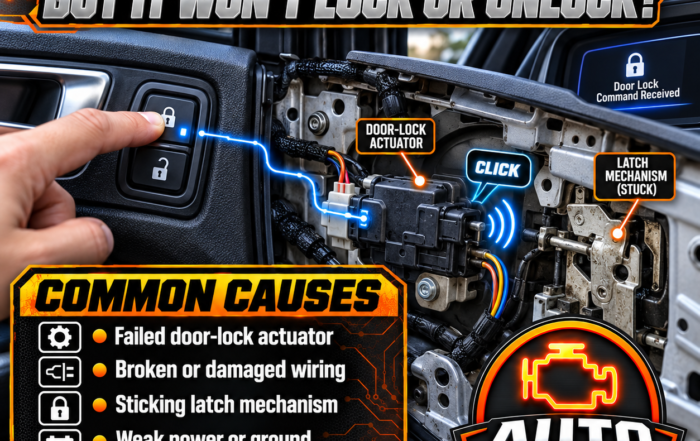
Power Windows and Door Locks Stop Working After Rain
Door electrical problems are especially common after moisture enters through damaged seals, vapor barriers or wiring boots.
Power windows, locks and mirrors may stop working because of:
- Water inside the master window switch
- Corroded door connectors
- Damaged wiring inside the door boot
- Moisture reaching the lock actuator
- A wet door-control module
- Failed grounds
- Damaged terminals
- Water entering after previous glass or door work
The feature may work again after the vehicle dries, but that does not mean the cause is resolved.
Corrosion may continue damaging the connector or wiring. An intermittent problem may eventually become a permanent failure.
Our car door electrical diagnostics and repair page covers electrical concerns involving power windows, locks, mirrors, switches and door wiring.
Car Lights Flicker or Stay On After Rain
Moisture can affect exterior lights, interior lights and dashboard illumination.
Possible causes include:
- Water inside a headlight or taillight housing
- Corroded bulb sockets
- Wet lighting connectors
- Damaged wiring insulation
- Poor grounds
- Moisture inside a switch
- Body control module input problems
- Door-latch sensors reporting that a door is open
- A relay that remains active
Interior lights that stay on can also drain the battery while the vehicle is parked.
A lighting problem may be controlled by the BCM rather than a simple switch. This means the circuit may require scanning and electrical testing in addition to bulb inspection.
Car Fuse Blows After Rain
A fuse that fails after rain or a car wash may indicate moisture creating an unintended path in the circuit.
Water can enter:
- Exterior light connectors
- Door switches
- Fuse boxes
- Trailer wiring
- Engine harnesses
- Wiper circuits
- Blower-motor wiring
- Parking-sensor connectors
- Aftermarket accessory wiring
If the same fuse continues to fail, repeatedly replacing it will not solve the problem.
Never install a larger fuse. The fuse protects the wiring from overheating when the circuit draws excessive current.
Our guide explaining why a car fuse keeps blowing covers short circuits, failed motors, damaged wiring and moisture-related fuse problems.
Radio, Display or Instrument Panel Restarts After Rain
A radio or dashboard display that restarts may be losing power, ground or communication.
Moisture may be affecting:
- Interior fuse-box connections
- Dashboard grounds
- Radio wiring
- Amplifier connectors
- Body-control circuits
- Communication-network wiring
- Aftermarket stereo connections
- Water-damaged modules
The problem may appear when another electrical feature is used because both systems share a weak connection.
Examples include:
- Radio restarts when the blower motor turns on
- Dashboard flickers when a window is operated
- Display goes dark after hitting a bump
- Instrument panel resets after rain
- Audio system remains on after the vehicle is turned off
These patterns can help identify whether several systems share the same circuit.
Blower Motor or Climate Controls Stop Working After Rain
Water entering through the cowl or windshield area may reach the blower motor, resistor, control module or climate-control wiring.
Possible symptoms include:
- Blower works only on certain speeds
- Fan stops after heavy rain
- Climate-control panel becomes unresponsive
- Blower starts without being commanded
- Water appears on the passenger-side floor
- Fuse or connector overheats
- Fan works again after the vehicle dries
The problem may involve more than the blower motor. Wiring, relays, control modules, sensors and compressor-command circuits may also need inspection.
Our car AC electrical diagnostics and repair page explains electrical climate-control problems involving blowers, switches, sensors and control modules.
ABS and Traction-Control Lights After Rain
The ABS and traction-control systems commonly rely on wheel-speed sensors located near the wheels, where they are exposed to water, dirt and road salt.
Rain-related ABS warnings may involve:
- Damaged wheel-speed sensor wiring
- Water inside a connector
- Corroded terminals
- A cracked sensor housing
- Damaged wheel-bearing components
- Low system voltage
- ABS module power or ground problems
- Communication faults
Because traction control and stability control use information from the ABS system, one wheel-speed signal problem can trigger several warnings.
Our brake services and ABS diagnostics page covers electronic braking concerns that may require system scanning and sensor testing.
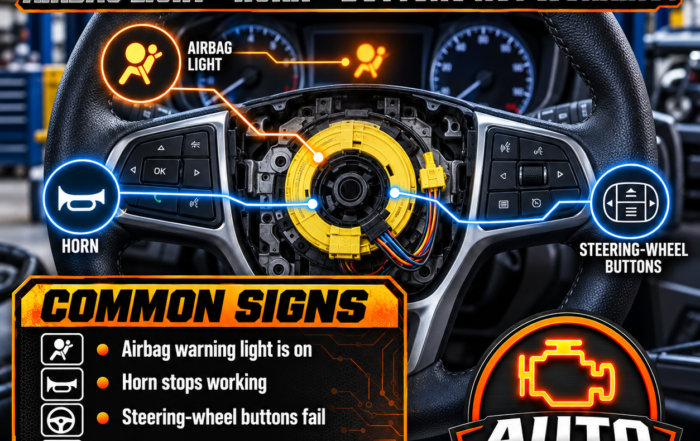
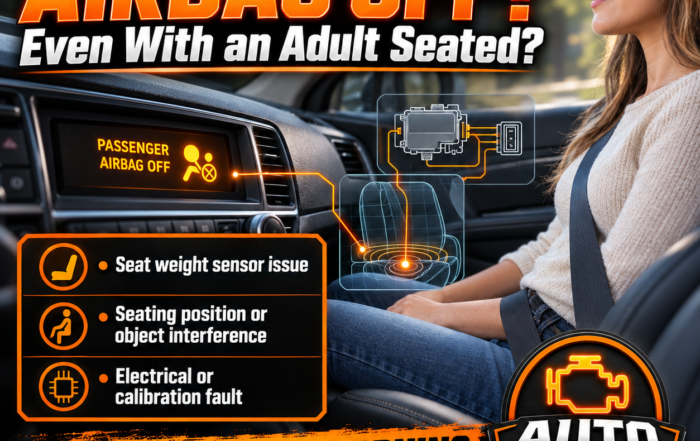
Airbag or SRS Light After Rain
An airbag or SRS warning after rain may involve moisture near:
- Seat connectors
- Floor wiring
- Occupant-detection components
- Seat-belt pretensioner wiring
- Impact sensors
- SRS module connectors
- Clock-spring circuits
- Interior grounds
Some vehicles have restraint-system wiring beneath the seats or carpeting. Water entering the passenger compartment can reach these circuits.
An airbag warning should not be ignored merely because it disappears after the vehicle dries. The SRS system may store fault information even when the visible warning is no longer active.
Related information is available in:
Blind-Spot Monitoring Unavailable After Rain
Blind-spot monitoring sensors and related wiring may be located near the rear bumper, quarter panels or side body areas.
The system may become unavailable because of:
- Water reaching a sensor connector
- Corroded wiring terminals
- Damaged bumper wiring
- Moisture inside a control module
- Low system voltage
- Communication faults
- Dirt, ice or heavy water covering the sensor area
- Previous collision repair
Temporary obstruction may clear when the area is cleaned or dried. A warning that repeatedly returns may indicate an electrical or sensor problem.
Our blind spot monitoring repair page explains concerns involving sensors, wiring, connectors and module communication.
Power Steering Warning After Rain
Electronic power steering systems rely on stable voltage, steering sensors, module communication and electrical connections.
A steering warning that appears after rain may involve:
- Moisture inside a connector
- Corroded power or ground terminals
- Low voltage
- Damaged communication wiring
- Water near a steering module
- Sensor-signal problems
- Fuse-box water intrusion
The warning may be accompanied by heavier steering or changing levels of assistance.
Our power steering module repair page explains electrical steering concerns involving warning lights, sensors, power supplies and module communication.
Can Rain Damage an ECU, ECM or BCM?
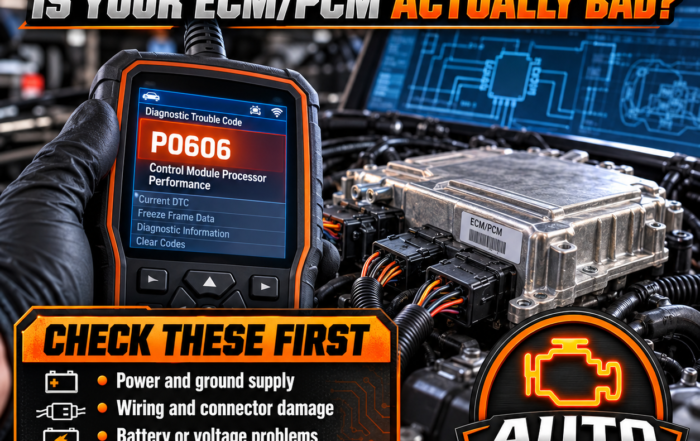
Water can damage vehicle computers, but the presence of a module-related code does not automatically prove that the module has failed.
A computer may stop responding because:
- Water entered its connector
- A fuse lost power
- A ground became corroded
- Network wiring was damaged
- Voltage dropped too low
- Another wet component disrupted communication
ECU and ECM Water-Related Problems
The ECU or ECM may control engine operation, sensor communication and other powertrain functions.
Moisture-related symptoms may include:
- No-start condition
- Engine stalling
- Reduced-power warning
- Check-engine light
- Multiple sensor codes
- Communication faults
- Unstable engine operation
Our ECU repair and ECM repair pages explain electrical concerns involving these modules and their supporting circuits.
BCM Water-Related Problems
The body control module may communicate with:
- Door locks
- Power windows
- Lighting
- Wipers
- Security systems
- Keyless entry
- Interior electronics
- Warning messages
Water near the BCM or its connectors can create several body-electrical symptoms at the same time.
Before determining that BCM repair is required, the module’s power, grounds, wiring and communication circuits should be tested.
The guide ECU vs. ECM vs. BCM explains the general differences between these computers.
Why the Problem May Disappear After the Vehicle Dries
A moisture-related electrical problem may disappear temporarily because the water evaporates and the unintended electrical path is removed.
However, drying does not necessarily reverse:
- Corrosion
- Damaged connector seals
- Loose terminals
- Water trapped beneath insulation
- Rusted grounding points
- Module damage
- Wiring deterioration
The next rainstorm or car wash may cause the problem to return.
Intermittent problems can become more difficult to diagnose when the system operates normally during inspection. Recording the timing and symptoms can help recreate the conditions that trigger the fault.
Information to Record When the Problem Happens
Before turning off the vehicle, record as much detail as possible.
Useful information includes:
- Which warning lights appeared
- Whether the engine started normally
- Whether the dashboard or radio restarted
- Which windows, locks or lights stopped working
- Whether the problem began during rain or afterward
- Whether the vehicle had just been washed
- Whether water is visible inside the cabin
- Whether the carpeting is wet
- Whether restarting clears the problem
- Whether moving a door or harness changes the symptom
- Which fuse failed
- Whether the vehicle recently had windshield, door or body repair
- Whether aftermarket electronics are installed
Photos or videos of the dashboard and affected system may help document an intermittent failure.
How Rain-Related Vehicle Electrical Problems Are Diagnosed
Diagnosing a moisture-related electrical problem requires locating both the affected circuit and the path the water used to reach it.
1. Reviewing the Timing of the Symptoms
The first step is determining:
- Whether the problem occurs during rain or afterward
- How long the vehicle must remain wet
- Whether a car wash triggers it
- Which systems fail together
- Whether heat or drying restores operation
- Whether previous repairs affected seals or wiring
This information helps narrow the inspection.
2. Performing a Full-System Scan
Vehicle modules may be scanned for:
- Low-voltage codes
- Communication codes
- Sensor faults
- Current and historical failures
- Modules that do not respond
- Faults shared across several systems
The relationship between the codes can be more useful than the number of codes stored.
3. Inspecting for Water Intrusion
The inspection may include:
- Door seals
- Windshield edges
- Cowl drains
- Sunroof drains
- Floor carpeting
- Trunk seals
- Light housings
- Fuse boxes
- Interior panels
- Module locations
- Wiring channels
Water stains, damp insulation and corrosion can help identify where the leak developed.
4. Checking Wiring and Connectors
Electrical connections may be inspected for:
- Green or white corrosion
- Water droplets
- Discolored terminals
- Loose pins
- Damaged connector seals
- Overheated areas
- Broken wiring
- Previous splices
- Rodent damage
- Water beneath insulation
A connector may appear dry outside while retaining moisture internally.
5. Testing Power and Grounds
Affected modules and components should be checked for stable power and ground.
Testing may include:
- Voltage measurements
- Voltage-drop testing
- Ground-circuit checks
- Fuse and relay testing
- Continuity checks
- Current-draw measurements
- Communication-network testing
This helps determine whether the component has failed or whether moisture is interrupting the supporting circuit.
6. Correcting the Source of Water
Repairing the electrical circuit without correcting the leak may allow the problem to return.
Depending on the source, the vehicle may require attention to:
- Seals
- Drain tubes
- Body seams
- Connector seals
- Vapor barriers
- Light housings
- Damaged wiring coverings
The affected area should be dried and the electrical damage evaluated.
7. Confirming Operation in Normal Conditions
After approved repairs are completed, the affected systems should be tested again.
The goal is to confirm that:
- The component receives proper voltage
- Grounds remain stable
- Modules communicate
- Warning lights do not return
- The battery enters normal shutdown
- The water-entry path has been addressed
Focused auto electrical diagnostics and repair can help locate electrical faults involving moisture, corrosion, wiring and vehicle modules.
What Should You Do When Electrical Problems Start During Rain?
When symptoms appear, avoid immediately clearing warning codes or disconnecting the battery unless necessary for safety. Stored fault information may help identify which systems lost power or communication.
Take these practical steps:
- Photograph the dashboard warnings
- Note which systems stopped working
- Check for visible water inside the vehicle
- Avoid repeatedly operating a failing motor or switch
- Do not install a larger fuse
- Do not continue jump-starting the vehicle without identifying the cause
- Keep wet electronic equipment disconnected when safe
- Avoid driving when braking, steering or essential lighting is affected
- Have the water-entry source and electrical fault investigated
Do not open or probe airbag, high-voltage or sensitive module connectors without appropriate knowledge and equipment.
Is It Safe to Drive With Rain-Related Electrical Problems?
That depends on which systems are affected.
Avoid driving when the vehicle has:
- Loss of steering assistance
- Brake or ABS concerns with changed braking behavior
- Headlights or brake lights that do not work
- A charging-system warning with electronics shutting down
- Smoke or an electrical burning smell
- Repeated fuse failure
- Water surrounding a fuse box or control module
- Stalling or intermittent no-start behavior
- Airbag or safety-system faults following significant water intrusion
- Windshield wipers that do not operate in rain
A convenience feature that temporarily stops working may not create an immediate driving hazard, but recurring electrical problems should still be investigated before the damage spreads.
Frequently Asked Questions
Why does my car have electrical problems only when it rains?
Moisture may be entering a connector, switch, wiring harness, fuse box or electronic module. When the water dries, the circuit may temporarily return to normal even though corrosion or seal damage remains.
Can a car wash cause electrical problems?
Yes. Pressurized water may reach damaged seals, connectors, light housings or engine-compartment wiring. A problem that repeatedly appears after washing suggests that moisture is reaching an electrical circuit.
Why will my car not start after heavy rain?
Water may be affecting ignition components, starter-control wiring, engine sensors, security circuits, grounds or module communication. The exact diagnosis depends on whether the engine does not crank or cranks without starting.
Can wet wiring drain a car battery?
Yes. Moisture may cause a light, relay, switch, accessory or module to remain active after the vehicle is turned off. It may also interfere with normal module shutdown.
Why do several dashboard lights come on after rain?
Several systems may share power, grounds or communication wiring. Moisture in one shared connection can cause multiple modules to report warnings.
Can rain cause the ABS and traction-control lights?
Yes. Water may affect a wheel-speed sensor, connector, wiring circuit or ABS module connection. One missing wheel-speed signal can disable ABS, traction control and stability control.
Can water cause the airbag light to turn on?
Yes. Moisture may reach seat wiring, floor connectors, crash-sensor circuits or the SRS module. The restraint system should be scanned to identify the stored fault.
Why do my power windows stop working after rain?
Water may enter a door switch, connector or wiring harness. Damaged door seals, vapor barriers and wiring boots can allow moisture to reach the window circuit.
Can a wet connector dry out and fix itself?
The system may begin working again after drying, but corrosion or damaged terminals may remain. The problem can return and may become more severe over time.
Can moisture damage the BCM?
Yes. The BCM or its connectors can be damaged by water, but power, grounds and wiring should be tested before concluding that the module itself has failed.
Why does the same fuse blow whenever it rains?
Water may be creating a short inside a connector, switch, light housing or wiring harness. Replacing the fuse will not correct the source of the moisture or damaged circuit.
Can rain cause a radio or dashboard to restart?
Yes. Water may affect a shared power connection, ground, interior fuse box, body-control circuit or communication network.
Should I disconnect the battery if water entered the vehicle?
Disconnecting the battery may be appropriate in some situations involving active electrical hazards, smoke or significant flooding, but it can also erase useful information and affect vehicle systems. Avoid touching wet electrical equipment and seek appropriate assistance.
Will electrical problems disappear when the car dries?
Some symptoms may temporarily disappear, but corrosion, connector damage and the original water leak can remain. A recurring rain-related problem usually requires further inspection.