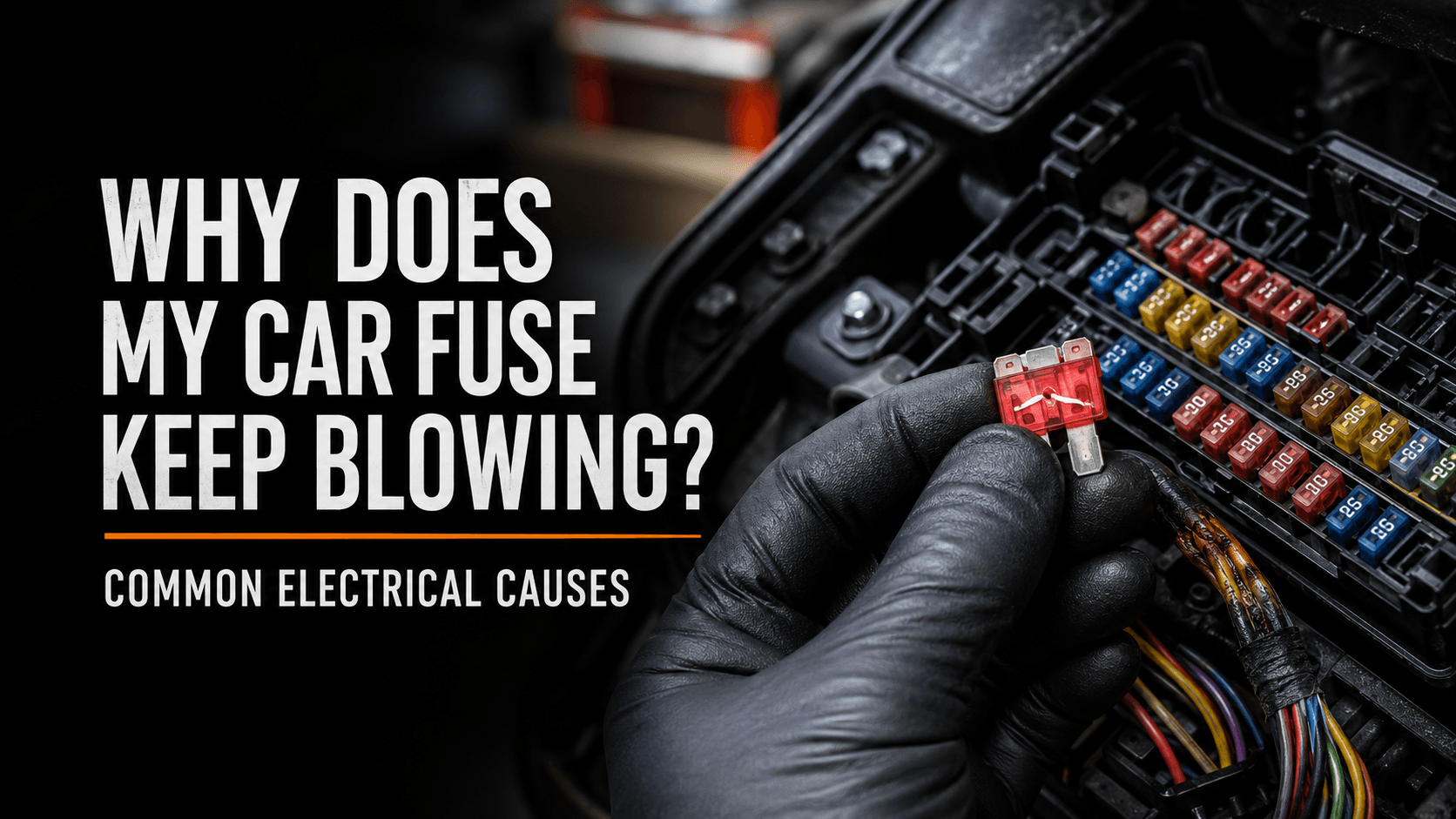
What Does It Mean When a Car Fuse Keeps Blowing?
A blown fuse can disable a headlight, power window, radio, blower motor, door lock or another electrical feature. Replacing the fuse may restore the system immediately, but when the same fuse fails again, the vehicle has an unresolved electrical problem.
Automotive fuses protect wiring and electrical components from excessive current. When too much electricity flows through a circuit, the fuse opens before the wiring becomes dangerously hot. The blown fuse is therefore a symptom and a safety response—not the underlying cause.
A fuse that repeatedly blows may indicate damaged wire insulation, a shorted motor, moisture inside a connector, an overloaded circuit or improperly installed aftermarket equipment. The timing of the failure can provide useful clues. A fuse that blows when a window reaches the top may have a different cause from one that fails as soon as the ignition is turned on.
The correct diagnostic approach is to identify which circuit the fuse protects, determine when the excessive current occurs and test the wiring and components connected to that circuit.
What Does a Car Fuse Do?
A vehicle fuse is a small protective device installed in an electrical circuit. Inside the fuse is a metal element designed to melt when current rises above the fuse’s rated capacity.
Once that element melts, the electrical path opens and power stops flowing through the circuit.
This helps protect:
- Wiring insulation
- Connectors and terminals
- Switches
- Motors
- Relays
- Sensors
- Electronic control modules
- Interior accessories
- Lighting circuits
Without a correctly sized fuse, an electrical short could overheat the wiring and potentially damage surrounding components.
The fuse does not control how much electricity a device normally uses. It simply disconnects the circuit when current becomes unsafe.
Why Does the Same Fuse Keep Blowing?
If a replacement fuse fails again, something in the circuit is still drawing too much current.
Common causes include:
- A wire touching metal
- Damaged or melted insulation
- A shorted electrical component
- A motor that is stuck or overloaded
- Moisture inside a connector or switch
- Corroded terminals
- Incorrectly installed aftermarket equipment
- A wire connected to the wrong circuit
- An incorrect fuse rating
- A failing relay
- A damaged socket
- Several accessories overloading one circuit
- Internal failure inside an electronic module
The fuse location or label may identify the general system, but one fuse can sometimes supply several components. A fuse labeled for interior electronics, for example, may protect multiple switches, modules and accessories.
What Is a Short Circuit?
A short circuit occurs when electrical current finds an unintended path with very little resistance.
Instead of flowing through the component the circuit was designed to operate, current may travel directly from a powered wire to ground. Because this path has very little resistance, current rises rapidly and the fuse opens.
A short circuit may result from:
- Wire insulation rubbed through against metal
- A wire pinched during a previous repair
- A loose terminal contacting another terminal
- Melted wiring near a hot engine component
- Rodent-damaged wires
- Collision damage
- An incorrect wiring connection
- Water bridging electrical terminals
- A failed motor or electronic component
The short may be constant or intermittent. A damaged wire may touch metal only when the vehicle moves, a door opens or a harness changes position.
Why Replacing the Fuse Does Not Fix the Problem
Installing another fuse restores the electrical connection, but it does not repair the damaged circuit.
If the fault remains, the replacement fuse will likely blow again. It may fail immediately, after several minutes or only when a particular feature is activated.
Repeatedly replacing fuses can also make diagnosis more difficult if the circuit becomes hotter or additional wiring is damaged.
A replacement fuse should be used only to determine whether the failure was temporary or to confirm when the problem occurs. It should not become the permanent repair.
Never Install a Larger Fuse
A fuse should always be replaced with the same amperage rating specified for that circuit.
Installing a higher-amperage fuse may allow excessive current to continue flowing through wiring that was not designed to handle it. The fuse may remain intact while the wire, connector or component overheats.
That can result in:
- Melted insulation
- Damaged connectors
- Burned terminals
- Failed electronic modules
- Smoke
- Electrical fire
A fuse that repeatedly fails is providing important information. Increasing the fuse size removes part of the circuit’s protection without correcting the cause.
Why a Fuse May Blow Immediately
A fuse that blows as soon as it is installed often indicates a direct short in the circuit.
This may mean a powered wire is already contacting ground or a connected component has developed an internal short.
Possible causes include:
- Pinched wiring
- Melted insulation
- Water inside a connector
- A failed motor
- A shorted relay
- A damaged socket
- Incorrect accessory wiring
- A failed control module
- A component connected with reversed polarity
The ignition position matters. If the fuse remains intact with the vehicle off but fails when the ignition is turned on, the fault may be in a component or branch of the circuit that receives power only in that ignition mode.
Why a Fuse Blows Only When a Feature Is Used
When a fuse fails only after a specific feature is activated, that feature and its wiring become important diagnostic clues.
Examples include:
- Fuse blows when the power window moves
- Fuse blows when the AC blower is turned on
- Fuse blows when the headlights are activated
- Fuse blows when the brake pedal is pressed
- Fuse blows when the door is opened
- Fuse blows when the rear defroster is turned on
- Fuse blows when the seat is adjusted
- Fuse blows when the windshield wipers operate
- Fuse blows when the vehicle shifts into reverse
The problem may involve the component itself, a moving wiring harness or a connection that fails only when electrical load increases.
Power Window Fuse Keeps Blowing
A power-window circuit contains switches, motors, wiring, connectors and sometimes a control module.
A window fuse may blow because:
- The window motor is internally shorted
- The regulator is binding and overloading the motor
- Wiring inside the door harness is damaged
- A wire is pinched inside the door
- Moisture entered the switch
- A connector terminal is loose or corroded
- The glass or track is creating excessive resistance
- A previous door repair damaged the circuit
Door wiring moves every time the door opens. A partially broken wire may touch another wire or the metal door structure only in certain positions.
When windows and locks are both affected, the problem may involve shared door wiring or body-control circuits. Our guide explaining why power windows and door locks stop working covers related switches, motors, wiring and module concerns.
Car AC or Blower Motor Fuse Keeps Blowing
The climate-control circuit may include a blower motor, resistor, control module, relay, switch, wiring and the climate-control panel.
A blower or AC fuse may repeatedly fail because of:
- A blower motor drawing excessive current
- Debris restricting the blower fan
- A seized or failing motor bearing
- Melted wiring near the motor
- A shorted blower resistor
- A failed blower-control module
- A damaged relay
- Moisture inside a connector
- Wiring rubbing against the dashboard structure
- A failed compressor-control circuit
A blower motor may continue operating while drawing more current than normal. The fuse may then fail only at higher fan speeds or after the motor has been running for several minutes.
Our car AC electrical diagnostics and repair page explains electrical problems involving blower motors, controls, relays, sensors and compressor signals.
Headlight or Lighting Fuse Keeps Blowing
Vehicle lighting circuits may include bulbs, sockets, switches, relays, wiring, grounds and computer-controlled outputs.
A lighting fuse may blow because of:
- Damaged wiring near the headlight
- A melted bulb socket
- Incorrect bulb installation
- Water inside the light housing
- Trailer wiring problems
- A shorted relay
- Wiring damaged after collision repair
- A pinched harness
- Aftermarket lights connected incorrectly
- A failed lighting-control module
- Corrosion inside a connector
A fuse that blows after a bulb replacement may indicate that the wrong bulb was installed, a connector was damaged or wiring was moved into contact with metal.
Lighting problems that involve flickering, lights remaining on or several lamps failing together may require broader vehicle lighting electrical repair.
Radio or Accessory Fuse Keeps Blowing
A radio or accessory circuit may power more than the radio itself. It can include power outlets, displays, amplifiers, charging ports and other interior electronics.
Possible causes include:
- A damaged phone charger
- Coins or metal objects inside a power outlet
- Incorrect stereo wiring
- A shorted amplifier
- Pinched dashboard wiring
- Water near an interior module
- An accessory drawing too much current
- Multiple aftermarket devices sharing one circuit
- A damaged USB port
- A failed display or radio unit
Before replacing a radio or control module, unplugging removable accessories may help determine whether an external device is causing the failure.
Door Lock Fuse Keeps Blowing
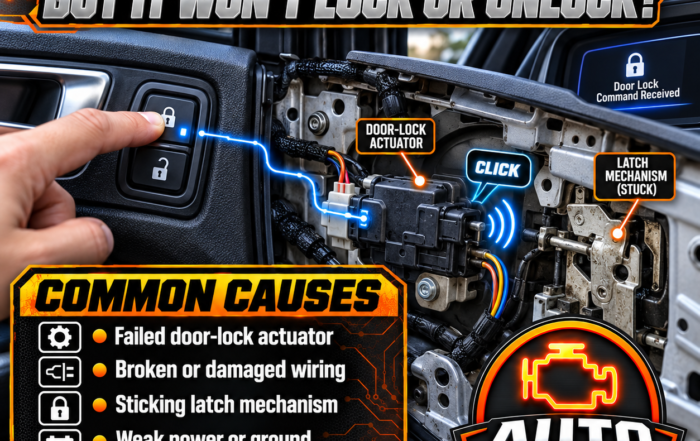
Power-lock systems can include switches, actuators, door-latch assemblies, body wiring and a body control module.
A lock fuse may fail because:
- A door-lock actuator is shorted
- An actuator is mechanically jammed
- Wiring is damaged inside the door boot
- Water entered a switch or latch
- A connector terminal is bent
- A wire was damaged during speaker or door repair
- The body-control circuit has an internal fault
The failure may occur only when one specific door is locked or unlocked. That pattern can help isolate which door circuit needs testing.
Our car door electrical diagnostics and repair service page describes electrical problems involving windows, locks, mirrors, switches and door wiring.
Wiper Fuse Keeps Blowing
Windshield-wiper systems contain a motor, linkage, switch, relay, wiring and sometimes a control module.
A wiper fuse may blow because:
- The wiper motor is failing
- The linkage is seized or restricted
- Ice or snow is preventing blade movement
- The motor wiring is damaged
- Water entered a connector
- The switch is shorted
- Wiring was pinched near the cowl
- The park circuit inside the motor failed
Operating frozen wipers can overload the motor. Even after the ice is removed, a damaged motor or overheated connector may continue causing fuse failure.
Power Seat Fuse Keeps Blowing
Power seats use motors, switches, wiring, connectors and sometimes memory-control modules.
Common causes of repeated seat-fuse failure include:
- A motor that is seized or overloaded
- An object blocking the seat track
- Wiring pinched beneath the seat
- A loose connector touching the seat frame
- Damaged insulation
- A shorted switch
- Water spilled beneath the seat
- A failed memory module
- Wiring damaged during interior work
The fuse may blow only when the seat is moved in one direction because each direction can activate a different part of the motor circuit.
Our power seat electrical repair page explains concerns involving seat motors, switches, connectors and control systems.
Why Moisture Can Cause Repeated Fuse Failure
Water can create electrical paths between terminals that should remain isolated. It can also begin corrosion that continues causing problems after the visible moisture has dried.
Common sources include:
- Leaking windshield seals
- Damaged door vapor barriers
- Sunroof drain leaks
- Flooded floor areas
- Water inside exterior lights
- Snow or rain entering damaged connectors
- Spilled drinks
- Engine-compartment pressure washing
- Missing connector seals
Moisture-related problems may be intermittent. A fuse may fail only during rain, after a car wash or when humidity is high.
Corrosion can also spread beneath wire insulation, making the full extent of the damage difficult to see.
Can a Relay Cause a Fuse to Blow?
Yes. A relay can contribute to fuse failure if its internal contacts or coil develop a short.
A relay is an electrically controlled switch. It allows a low-current signal to control a higher-current circuit such as a fan, fuel pump, blower motor or lighting system.
A failed relay may:
- Remain stuck on
- Overheat
- Short internally
- Create excessive resistance
- Damage its socket
- Send power to the wrong part of the circuit
However, a hot or damaged relay may also be the result of another component drawing excessive current. Replacing the relay without testing the circuit may not solve the problem.
Can a Motor Draw Too Much Current Without Being Completely Failed?
Yes. An electrical motor may continue working while drawing more current than the circuit allows.
This can happen when:
- Bearings begin to seize
- Mechanical movement is restricted
- Internal windings are damaged
- Debris blocks the fan or mechanism
- The motor overheats
- The component is forced beyond its normal travel
- Voltage is low and the motor struggles under load
The fuse may blow only after the motor runs for a while or reaches a difficult part of its movement.
Current-draw testing can compare the motor’s actual electrical demand with expected circuit operation.
Aftermarket Electronics and Blown Fuses
Aftermarket accessories can create repeated fuse problems when they are connected incorrectly or placed on a circuit that cannot support the added load.
Examples include:
- Remote starters
- Alarm systems
- Stereo amplifiers
- Dash cameras
- Additional lighting
- Heated accessories
- Phone chargers
- GPS trackers
- Trailer wiring
- Power inverters
- Audio equipment
- Aftermarket security devices
Common installation problems include:
- Tapping into the wrong wire
- Using an undersized wire
- Missing circuit protection
- Poor grounding
- Loose connections
- Exposed wire strands
- Excessive load on an existing fuse
- Wiring routed against sharp metal
- Connections made inside communication circuits
A fuse problem that begins shortly after equipment installation should include that wiring in the diagnostic inspection.
Can a Bad Ground Blow a Fuse?
A weak ground more commonly causes low voltage, slow operation, flickering or system resets. However, a damaged ground can sometimes contribute to unusual current paths.
When the intended ground path is unavailable, electrical current may attempt to return through another component, cable or communication circuit. This can create overheating, damaged wiring or fuse failure in a related system.
Grounding concerns may be suspected when:
- Several systems behave unpredictably
- Lights change brightness
- Gauges move when accessories are used
- Cables become warm
- The radio resets
- A fuse fails only with several systems operating
- The problem changes when a ground cable is moved
Testing should include both power and ground sides of the affected circuit.
Can Low Voltage Make a Fuse Blow?
Low voltage by itself does not always blow a fuse, but it can contribute to high current in some motors and electrical loads.
A motor receiving insufficient voltage may work harder, operate slowly and draw excessive current. Low voltage can also cause relays to chatter or electronic systems to behave unpredictably.
Possible sources of low voltage include:
- Weak battery
- Charging-system problem
- Corroded battery terminal
- Damaged cable
- Poor engine ground
- High-resistance connector
- Loose fuse-box connection
When a fuse problem occurs together with slow starting, dim lights or several dashboard warnings, the main power and charging circuits may also need evaluation.
Why a Fuse May Blow After Battery Replacement
A fuse problem that appears after battery work may result from:
- Reversed battery polarity
- A tool contacting power and ground
- A connector being disturbed
- A cable installed incorrectly
- Aftermarket wiring attached to the battery
- A loose terminal
- A damaged fusible link
- A circuit receiving a voltage surge
- Wiring pinched beneath the battery tray
Battery replacement may also reveal an existing problem. Restoring full battery voltage can cause a damaged component or circuit to draw enough current to fail its fuse.
What Is a Fusible Link or Main Fuse?
In addition to small blade fuses, vehicles may use larger main fuses or fusible links to protect high-current circuits.
These may protect:
- Alternator output
- Starter-related circuits
- Main fuse box supply
- Engine-management power
- Cooling fans
- Electronic power steering
- Major body-electrical systems
A blown main fuse can disable several systems or prevent the vehicle from starting.
When the vehicle has no electrical power after a battery connection, jump-start or wiring event, the main fuse and high-current protection devices may need inspection.
A vehicle that does not start can also have problems unrelated to the fuse. Our guide to a car that will not start because of an electrical problem explains battery, cable, relay, security and module-related possibilities.
Why a Fuse Box May Become Hot or Melted
Heat around a fuse box does not always mean the fuse rating is too low. It may indicate poor contact between the fuse and its terminals.
A loose or damaged terminal creates resistance. As current flows through that resistance, heat builds at the connection.
Signs of fuse-box damage include:
- Melted plastic
- Darkened terminals
- Burned smell
- Loose fuse fit
- Discolored relay socket
- Intermittent power
- Fuse that feels unusually hot
- Electrical system working when the fuse box is moved
Replacing only the fuse may not correct damaged terminals inside the fuse box.
How a Repeatedly Blowing Fuse Is Diagnosed
Finding the cause requires identifying when the circuit draws excessive current and which component or wire is responsible.
Step 1: Confirm the Correct Fuse
The first step is confirming:
- Correct fuse location
- Correct amperage
- Correct fuse type
- Which systems the fuse protects
- Whether previous repairs changed the circuit
The fuse-box cover and owner’s manual may identify the circuit, but wiring information may be needed when one fuse supplies several components.
Step 2: Determine When the Fuse Fails
The timing of failure can narrow the search.
Important questions include:
- Does it blow immediately?
- Does it blow only with the ignition on?
- Does it blow while starting?
- Does it blow when a specific switch is used?
- Does it fail after driving over bumps?
- Does rain affect the problem?
- Does it fail only after the circuit warms up?
- Did the problem begin after another repair?
- Does unplugging an accessory prevent failure?
This information helps identify which circuit branches are active at the moment the fuse opens.
Step 3: Inspect Wiring and Connectors
The circuit may be inspected for:
- Rubbed-through insulation
- Pinched wiring
- Melted areas
- Corrosion
- Loose terminals
- Moisture
- Rodent damage
- Collision damage
- Previous splices
- Aftermarket connections
- Wires contacting moving parts
- Harnesses near hot components
Visual inspection is important, but damage can also exist inside insulation or beneath connector seals.
Step 4: Isolate Circuit Components
Components connected to the circuit may be disconnected one at a time or tested through a controlled diagnostic method.
If the excessive current disappears after one component or branch is isolated, that section becomes the focus of further testing.
The goal is not simply to keep installing fuses. Diagnostic tools can protect the circuit while the fault is being traced.
Step 5: Measure Current and Circuit Resistance
Current measurements can determine whether a component is drawing more electricity than expected.
Voltage-drop testing may also reveal resistance in wiring and connections. Depending on the failure, continuity and short-to-ground tests may be appropriate.
Testing should be performed with an understanding of electronic modules and sensitive vehicle circuits.
Step 6: Confirm the Repair
After the cause has been repaired, the circuit should be operated under the conditions that originally caused the fuse to blow.
That may include:
- Moving the window through its full range
- Running the blower at every speed
- Operating the lights
- Opening and closing the door
- Moving the seat
- Driving over normal road conditions
- Allowing the circuit to reach operating temperature
A fuse that remains intact without verifying circuit operation does not always confirm that the problem has been resolved.
Can a Blown Fuse Cause a Battery to Die?
A blown fuse usually opens a circuit and stops current flow, so the failed fuse itself generally does not drain the battery.
However, the electrical problem that caused the fuse to blow may be related to a larger circuit fault. A relay may remain active, a module may fail to shut down or damaged wiring may create an unintended current path.
When a battery repeatedly loses power while the vehicle is parked, our guide to a car battery that keeps dying overnight explains parasitic draws involving lights, relays, accessories and modules.
Can a Body Control Module Cause Repeated Fuse Failure?
The body control module may manage or communicate with lighting, locks, windows, security systems, wipers and other body-electrical functions.
A BCM could contribute to fuse failure if it has an internal short or a controlled output becomes damaged. However, wiring and connected components should be tested before concluding that the module itself has failed.
A BCM-related circuit problem may also be caused by:
- Missing ground
- Corroded connector
- Water intrusion
- Shorted lock actuator
- Damaged door wiring
- Failed interior light circuit
- Incorrect aftermarket connection
- Low or unstable voltage
The guide comparing ECU, ECM and BCM functions explains the general differences between these vehicle computers.
Our BCM repair page provides additional information about body-control electrical concerns.
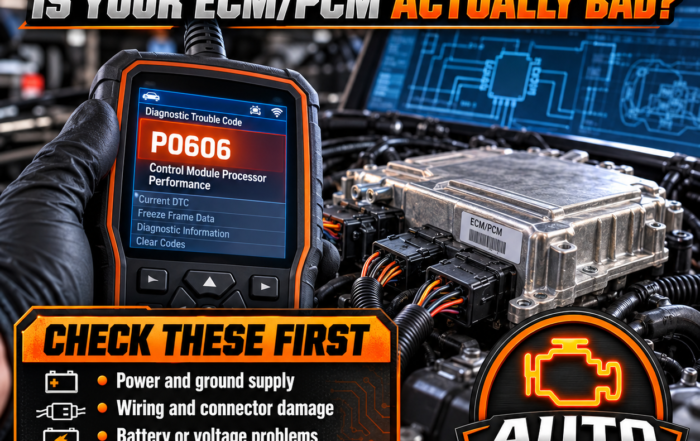
Can ECU or ECM Problems Blow a Fuse?
An ECU or ECM circuit may have a fuse protecting its power supply. That fuse can fail because of a shorted computer, but it can also blow because of wiring, sensors, actuators or other components connected to the same power circuit.
Possible causes include:
- Damaged engine wiring harness
- Shorted sensor heater
- Failed ignition component
- Water in an engine connector
- Wire melted near the exhaust
- Shorted actuator
- Incorrect previous repair
- Internal ECU or ECM fault
The computer should not be replaced until its supporting circuit has been tested.
Information about these systems is available on the ECU repair and ECM repair pages.
Is It Safe to Drive With a Blown Fuse?
That depends on which circuit is affected.
A blown fuse may disable a convenience feature, but it can also affect:
- Brake lights
- Headlights
- Windshield wipers
- Airbag or SRS systems
- ABS
- Electronic power steering
- Engine controls
- Cooling fans
- Fuel delivery
- Charging-system functions
Avoid driving when the failed circuit affects visibility, braking, steering, engine operation or a required safety system.
Also stop using the affected circuit if there is:
- A burning smell
- Smoke
- Melted plastic
- Hot wiring
- Repeated fuse failure
- Flickering followed by total power loss
- Signs of water inside the fuse box
The owner’s manual may help identify which feature the fuse protects, but some fuse labels cover several systems.
Information to Record Before Electrical Testing
When the fuse failure is intermittent, record the conditions surrounding it.
Useful information includes:
- Fuse label and amperage
- Which features stopped working
- Whether the ignition was on
- Which switch was being used
- Whether the vehicle was moving
- Weather conditions
- Whether the door, seat or steering wheel was moved
- Recent battery or electrical repairs
- Recent stereo or accessory installation
- Whether water entered the vehicle
- Whether the fuse failed immediately or after several minutes
- Whether a motor sounded slow or strained
- Whether a burning smell was present
These details can help identify which branch of the circuit was active when the failure occurred.
Frequently Asked Questions
Why does my car fuse blow as soon as I replace it?
An immediate failure often indicates a direct short to ground, shorted component, incorrect wiring connection or moisture inside the circuit. The circuit should be tested before more fuses are installed.
Can I put a bigger fuse in my car?
No. The fuse rating is selected to protect the wiring and components. A higher-amperage fuse may allow the wiring to overheat before the fuse opens.
Why does the fuse blow only when I turn something on?
The component, motor or wiring activated by that switch may be shorted or drawing excessive current. The problem may also involve a moving harness or damaged connector.
Can a bad relay keep blowing a fuse?
Yes. A relay may short internally or have a damaged socket. However, the relay may also be overheating because another component is drawing excessive current.
Can wet wiring cause a fuse to blow?
Yes. Water can create unintended electrical paths and cause corrosion between terminals. Problems may appear after rain, snow, a car wash or an interior water leak.
Can a bad motor blow a fuse?
Yes. A motor with seized bearings, damaged windings or restricted movement can draw more current than the fuse allows.
Why does my power-window fuse keep blowing?
Possible causes include a failing window motor, binding regulator, damaged door wiring, pinched harness, wet switch or shorted connector.
Why does my blower-motor fuse keep blowing?
The blower motor may be drawing excessive current, the fan may be restricted, or the circuit may have damaged wiring, a failed resistor, control module or relay.
Can aftermarket electronics cause blown fuses?
Yes. Incorrectly connected stereos, remote starters, lights, chargers, alarms and other accessories can overload circuits or create short circuits.
Does a blown fuse mean the electrical component is bad?
Not necessarily. The component may have failed, but the cause may also be damaged wiring, moisture, a connector problem, incorrect fuse size or another device on the same circuit.
Can a control module cause a fuse to blow?
A module can develop an internal short, but its wiring, power supply, grounds and connected components should be tested before the computer is replaced.
Why does the fuse work for a while before blowing?
The component may draw excessive current only after warming up, moving to a certain position or operating under a heavier load. Heat, vibration and moisture can also affect intermittent faults.
Can I keep replacing the fuse until I find the problem?
Repeated fuse replacement is not a reliable diagnostic method and may allow additional circuit damage. The circuit should be isolated and tested safely.
What if the fuse does not blow when the repair shop checks it?
Intermittent faults may depend on temperature, moisture, movement or a particular electrical load. Record exactly when the failure occurs and which feature is being used.