What Multiple Dashboard Warning Lights Can Mean
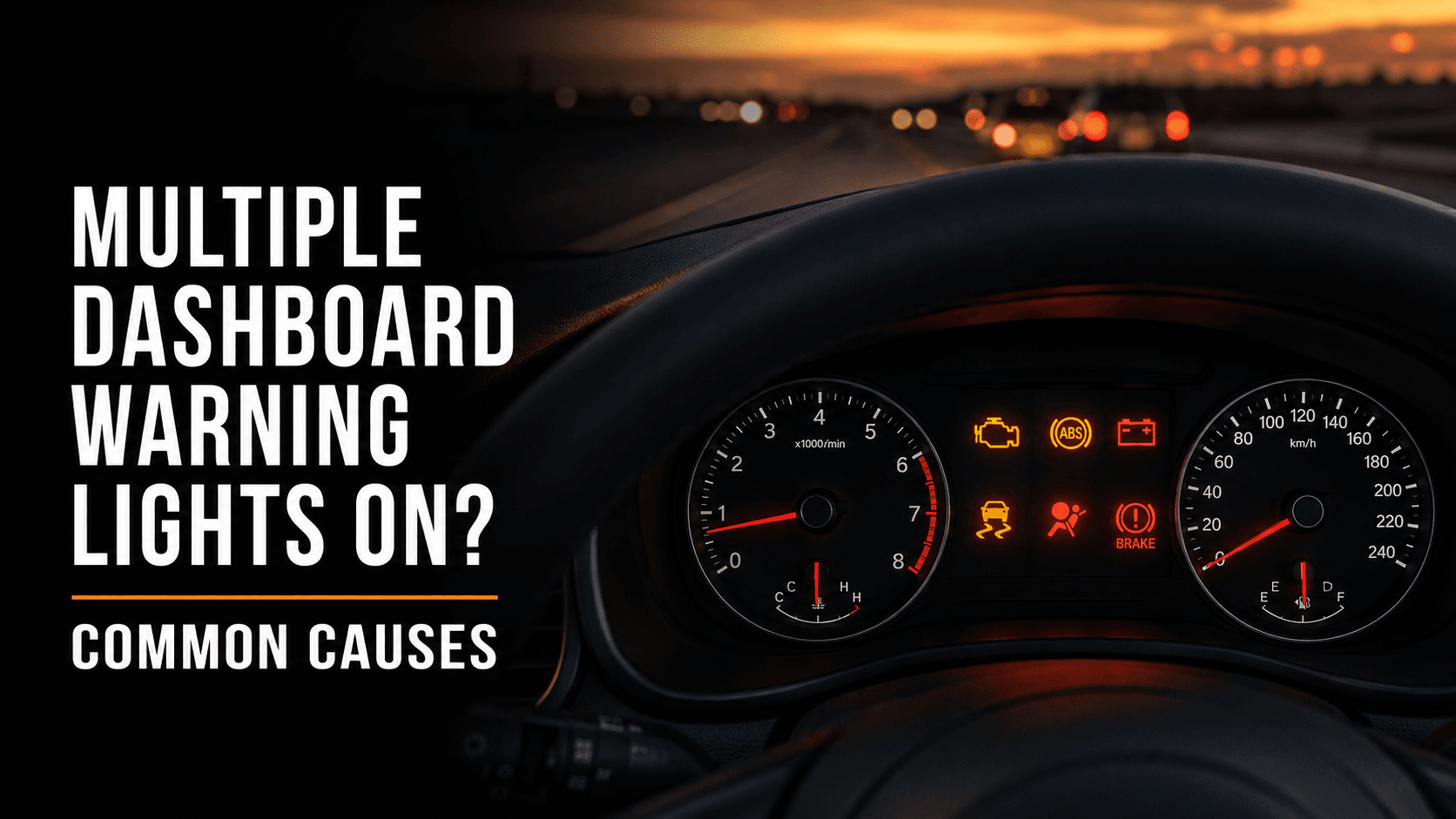
Seeing one dashboard warning light can be concerning. Seeing the ABS, traction control, power steering, airbag, battery and check-engine lights appear together can make it seem as though several major parts failed at once.
That is possible, but it is not always the most likely explanation.
Modern vehicles contain many electronic control modules that share power supplies, grounds, sensors and communication networks. When one shared part of that system develops a problem, several modules may report faults at the same time. A weak battery, unstable charging voltage, damaged ground connection or interrupted communication circuit can create warning lights across systems that appear unrelated.
The pattern, timing and combination of warnings can provide important clues. Multiple lights that appear during startup may point toward low voltage. Warnings that begin after rain may involve moisture or corrosion. ABS, traction-control and stability-control lights appearing together may be connected to a shared wheel-speed signal.
Understanding these relationships can help prevent unnecessary parts replacement and provide a clearer path toward diagnosis.
What It Means When Several Dashboard Lights Come On Together
A warning light usually means that a vehicle system detected information outside its expected range. It does not always mean that the component represented by the symbol has failed.
For example, a power steering warning may appear because the steering module lost communication with another computer. A traction-control warning may appear because the ABS module is missing a wheel-speed signal. An airbag light may appear after system voltage drops too low during startup.
When several warnings illuminate together, the vehicle may be experiencing:
- Low or unstable electrical voltage
- A charging-system problem
- A weak or damaged ground connection
- A blown fuse or failed relay
- A damaged wiring harness or connector
- A shared sensor failure
- A vehicle communication-network problem
- One unavailable control module
- Moisture or corrosion inside an electrical connection
- A problem caused by recent battery or electrical work
The warning lights are evidence that the systems noticed a problem. Further testing is needed to determine whether the warnings share one cause or represent separate failures.
Can One Electrical Problem Cause Multiple Warning Lights?
Yes. One electrical fault can affect several modules and dashboard warnings.
Vehicle systems often share electrical resources. Several computers may receive power from the same fuse, rely on the same grounding point or communicate through the same network wiring. If that shared connection becomes unreliable, every system using it may begin reporting faults.
Consider a weak ground connection. The vehicle may still start and drive, but voltage may become unstable as electrical demand changes. The ABS module, steering module, body control module and engine computer may all respond differently to that instability.
The driver might then see:
- ABS warning
- Traction-control warning
- Power steering warning
- Check-engine light
- Battery warning
- Airbag or SRS warning
- Security-system message
- Driver-assistance unavailable message
The presence of several warnings does not prove that every listed system needs repair. It means the relationship between those systems must be evaluated.
Low Battery Voltage and Multiple Dashboard Warning Lights
Low voltage is one of the most common reasons several dashboard warnings appear during the same startup cycle.
Electronic modules need a minimum amount of voltage to turn on, complete their internal checks and communicate with other systems. The starter motor creates a large electrical demand when the engine cranks. If the battery is weak or a connection has excessive resistance, system voltage may drop far enough for some modules to shut down or record faults.
Possible signs of low-voltage warnings include:
- Multiple lights appearing immediately after startup
- Warnings clearing after the vehicle is restarted
- The clock or radio losing saved settings
- Slow engine cranking
- Interior lights dimming during startup
- Clicking from the starter or relay area
- Warning messages appearing after the vehicle sits overnight
- Several communication codes stored at once
A battery can still turn on the headlights and dashboard while being unable to maintain stable voltage during cranking.
When the vehicle also has a recurring dead-battery problem, the battery itself may not be the only concern. A circuit or module may continue drawing power after shutdown. Our guide to why a car battery keeps dying overnight explains common sources of parasitic electrical draw.
Charging-System Problems While the Engine Is Running
The battery supplies power before the engine starts, but the charging system must maintain electrical voltage while the vehicle is running.
If charging voltage becomes too low, too high or unstable, electronic systems may begin shutting down or reporting faults. The driver may first notice flickering lights, a battery warning or electronics that restart. Additional warnings may appear as voltage continues to change.
Possible charging-related symptoms include:
- Battery warning light while driving
- Headlights changing brightness with engine speed
- Dashboard or radio restarting
- Steering assistance becoming unavailable
- Multiple warnings appearing after several minutes of driving
- Blower motor changing speed unexpectedly
- Vehicle stalling at low speed
- Hot battery cables or terminals
- A recently replaced battery becoming discharged
The cause may involve more than the alternator. Battery cables, grounds, charging-control wiring, fuses, connectors and module commands may also affect charging performance.
Testing should evaluate voltage under different electrical loads rather than relying only on whether the vehicle starts.
Weak Grounds and High-Resistance Connections
Electrical current must return through a ground circuit after passing through a component. A weak, loose or corroded ground can affect every system connected to that grounding point.
A ground connection may look acceptable from the outside while corrosion or looseness creates resistance between the terminal and the vehicle body. The circuit may work under a light load but fail when several electrical systems operate together.
Signs that may point toward a poor ground include:
- Dashboard lights flickering
- Gauges behaving unpredictably
- Several warnings appearing when the blower or headlights are used
- Slow or inconsistent starting
- Lights dimming when another accessory activates
- A radio resetting while driving
- Electrical problems changing when a cable or harness is moved
- Warning lights becoming worse in wet conditions
- A terminal or cable becoming unusually warm
A simple continuity test may not always reveal resistance that appears under load. Voltage-drop testing can help identify where power is being lost across a cable, terminal, connector or ground.
ABS, Traction Control and Stability-Control Lights Together
The ABS, traction-control and electronic stability-control systems often share wheel-speed sensors and information from the ABS control module.
When one wheel-speed signal becomes unavailable or unreliable, the vehicle may disable several related functions. This can cause multiple lights to appear even though the problem began with one sensor, wire or connection.
Common causes include:
- Failed wheel-speed sensor
- Damaged wheel-speed sensor wiring
- Corroded connector
- Damaged tone ring or wheel bearing
- ABS module communication problem
- Low system voltage
- Blown fuse
- Poor module power or ground
- Wiring damage following suspension or brake work
A basic code reader may not access the ABS system. Diagnosing these warnings may require equipment that can communicate with the ABS module and view live wheel-speed information.
Our brake services and ABS diagnostics page explains the types of braking and electronic ABS concerns that may require further inspection.
Power Steering Warning With Other Dashboard Lights
Many newer vehicles use electronic power steering rather than a traditional hydraulic system. Electronic steering assistance depends on stable voltage, steering sensors and communication between several modules.
When voltage drops or network communication is interrupted, the steering system may reduce or disable assistance as a protective response.
The driver may notice:
- Power steering warning
- Heavier steering effort
- Steering assistance changing during a drive
- ABS or traction-control warnings
- Battery warning
- Communication codes
- Steering returning after the vehicle is restarted
The steering module should not automatically be replaced because a warning is present. Its power, grounds, sensor inputs and communication circuits should be tested first.
More information about these systems is available on our power steering module repair page.
Airbag or SRS Light Appearing With Other Warnings
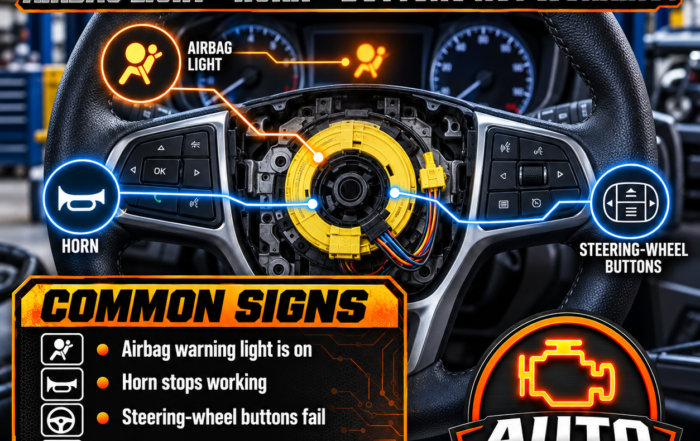
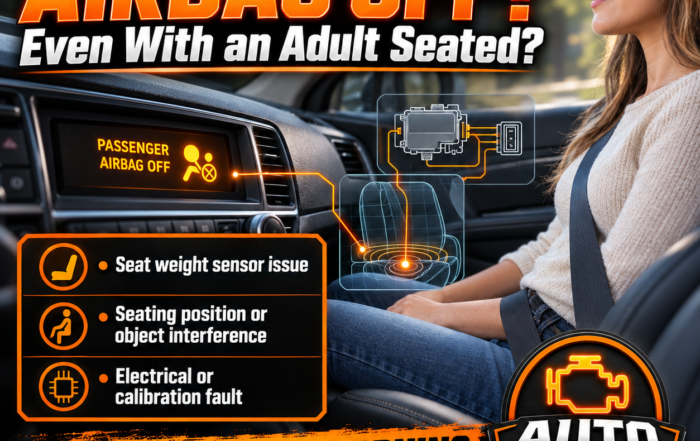
An airbag or SRS light means the supplemental restraint system detected a fault. That fault may involve a crash sensor, seat-belt component, wiring connection, occupant-detection system or control module.
When the SRS warning appears with several unrelated lights, low voltage or a communication problem may be part of the larger issue. However, an airbag warning should not be assumed to be caused only by the battery.
The restraint system stores its own fault information and should be scanned directly.
Related guides include:
The airbag and SRS warnings may refer to the same general safety system, but the stored fault must still be identified before the cause can be confirmed.
Vehicle Communication Faults and U-Codes
Modern vehicle modules communicate through electronic data networks. These networks allow the engine computer, transmission module, ABS system, body control module, steering module and other computers to exchange information.
When communication is interrupted, the affected modules may store diagnostic trouble codes beginning with the letter U. These are commonly called communication codes or U-codes.
A communication fault may result from:
- One module losing power
- A failed module ground
- Damaged network wiring
- Shorted communication wires
- Corrosion inside a connector
- Water intrusion
- Low battery voltage
- Aftermarket equipment connected to network wiring
- One failed module interfering with other modules
A “lost communication” code does not automatically prove that the named module is defective. The code may have been stored by other computers because they could no longer reach it.
Before replacing a module, technicians generally need to determine:
- Whether the module responds to diagnostic equipment
- Whether it has proper power and ground
- Whether network wiring is intact
- Whether another device is interfering with communication
- Whether the code is current, intermittent or historical
Our guide to ECU vs. ECM vs. BCM explains how several commonly discussed vehicle computers differ.
ECU, ECM and BCM Problems That Can Trigger Multiple Warnings
The terms ECU, ECM and BCM are often used when a vehicle develops several electronic problems, but they do not all control the same systems.
ECU and ECM Concerns
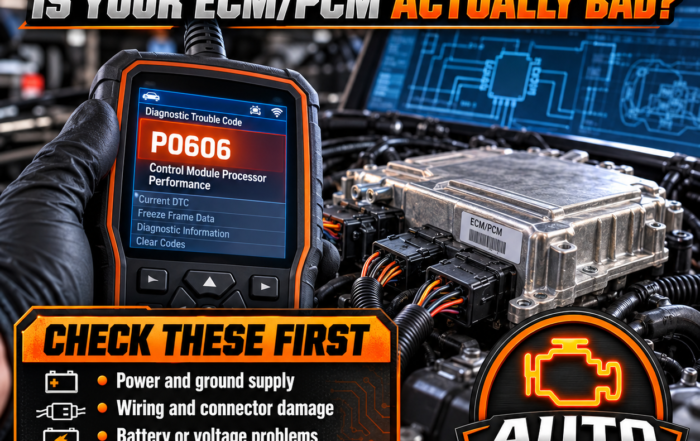
Depending on the vehicle, the ECU or ECM may manage engine operation, emissions functions, sensor information and communication with other modules.
A power, ground or communication problem involving the engine computer may cause:
- Check-engine light
- No-start condition
- Reduced-power message
- Communication warnings
- Transmission-related warnings
- Stability-control warnings
- Sensor-related codes
Our ECU repair and ECM repair pages explain the types of electrical concerns that may involve these modules.
BCM Concerns
The body control module commonly communicates with or manages body-electrical systems such as:
- Interior and exterior lighting
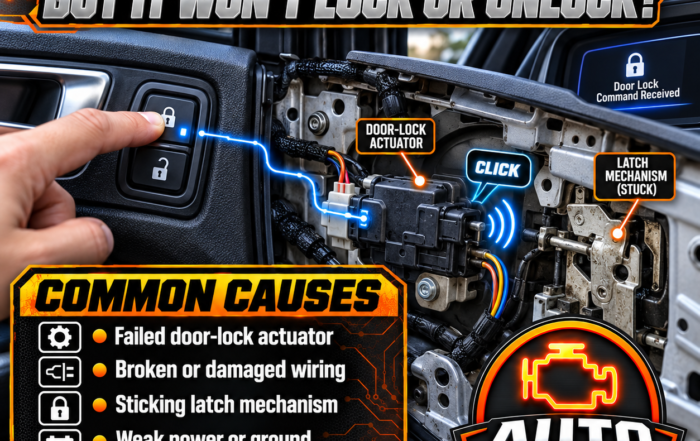
- Power locks
- Power windows
- Security functions
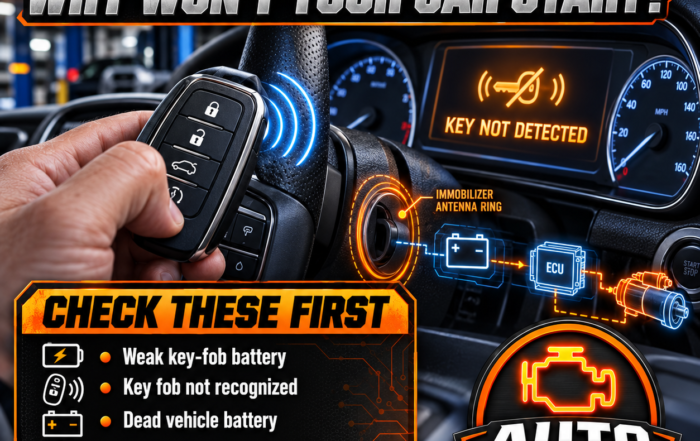
- Keyless entry
- Wipers
- Interior electronics
- Warning messages
A BCM-related concern may create several body-electrical symptoms at once. However, low voltage, damaged wiring or a poor ground can create similar symptoms.
The module’s supporting circuits should be checked before determining whether BCM repair is necessary.
Warning Lights After Replacing or Disconnecting the Battery
Several warnings may appear after a battery has been disconnected, replaced or completely discharged.
This can happen because:
- Stored settings were lost
- Steering-angle information needs to be relearned
- Window or sunroof positions need initialization
- Low voltage was recorded before replacement
- Modules temporarily lost communication
- The new battery connection is loose
- A ground cable was not secured properly
- The original battery-drain problem remains
Some warnings may clear after the vehicle completes its system checks or is driven briefly. Others indicate an active fault that still needs diagnosis.
Warnings should not be repeatedly cleared without checking why they returned. A code that comes back immediately usually indicates that the system still detects the problem.
Dashboard Warning Lights After a Jump-Start
Jump-starting a vehicle can restore enough power to start the engine, but it does not explain why the battery became discharged.
Several lights may remain on after a jump-start because:
- System voltage was extremely low
- Modules recorded communication errors
- The charging system is not maintaining voltage
- The battery has an internal problem
- A battery cable or ground has high resistance
- A parasitic draw remains present
- A fuse was damaged during the electrical event
When the vehicle will not start reliably, read our guide explaining how to tell whether a car that will not start may have an electrical problem.
Warning Lights That Appear After Rain or a Car Wash
Moisture can affect electrical systems in several ways. It may enter through a damaged seal, collect inside a connector or reach wiring beneath the carpet or dashboard.
Possible moisture-related warning patterns include:
- ABS and traction-control warnings
- Airbag or SRS light
- Power steering warning
- Keyless-entry or security problems
- Interior lights behaving incorrectly
- Door locks or windows becoming intermittent
- Several modules losing communication
- Warning lights disappearing after the vehicle dries
Moisture does not need to completely flood a module to create a problem. A small amount of water inside a connector can begin corroding terminals and increase resistance.
Because water may travel along wiring, the visible wet area may not be the location of the electrical failure.
Warning Lights That Disappear After Restarting the Vehicle
A warning that clears after restarting the engine may have been caused by a temporary voltage or communication failure.
Cycling the ignition allows modules to restart and attempt communication again. The visible warning may disappear, but the fault information can remain stored.
Temporary warnings can still be important when they occur repeatedly. Common causes include:
- Weak battery voltage during startup
- Loose power connection
- Intermittent ground
- Module briefly losing communication
- Sensor signal dropping out
- Connector affected by vibration
- Heat-sensitive relay or component
- Moisture inside a circuit
The time and conditions surrounding the warning can help guide diagnosis. Write down which lights appeared, when they came on and what the vehicle was doing at the time.
Can Multiple Warning Lights Be Caused by a Blown Fuse?
Yes. A single fuse may supply power to more than one component or vehicle module.
When that fuse opens, several systems can become unavailable. Other modules may then report communication faults because the affected computer is no longer online.
A fuse may blow because of:
- Shorted wiring
- Damaged insulation
- Failed motor or actuator
- Moisture inside a connector
- Incorrectly installed accessory
- Shorted sensor
- Internal module failure
- Wiring contacting metal
Replacing the fuse may temporarily restore the system, but a fuse that blows again indicates an unresolved circuit problem.
Never install a higher-amperage fuse to prevent repeated failure. The fuse is intended to protect the wiring from excessive current and overheating.
Is It Safe to Drive With Multiple Dashboard Warning Lights?
That depends on which warnings are present and how the vehicle is behaving.
Some warnings indicate that a convenience feature is unavailable. Others involve braking, steering, charging, engine temperature or safety systems.
Avoid continuing to drive when:
- A red brake warning remains on
- Steering assistance is lost or changes significantly
- The engine-temperature warning appears
- The oil-pressure warning is on
- The battery or charging warning appears and electronics are shutting down
- The vehicle stalls or struggles to stay running
- Headlights or essential lighting stop working
- There is smoke, a burning smell or an overheated electrical connection
- The vehicle enters reduced-power mode in unsafe conditions
- Multiple warnings appear with noticeable changes in braking or handling
The owner’s manual can explain the specific warning symbols used by the vehicle manufacturer.
Even when the vehicle seems to drive normally, repeated warnings should not be ignored. A system may have disabled a safety or driver-assistance feature until the fault is corrected.
How Multiple Dashboard Warning Lights Are Diagnosed
Diagnosing several warnings requires more than reading one fault code.
1. Documenting the Warning Pattern
The first step is identifying:
- Which lights appeared
- Whether they appeared together
- When the problem occurs
- Whether the vehicle was starting, driving or parked
- Whether weather or temperature affects it
- Whether the vehicle recently had battery, wiring or collision work
- Whether restarting clears the warnings
Photos or videos of the dashboard can be useful when the problem is intermittent.
2. Checking Battery and Charging Voltage
Battery condition, charging voltage and voltage during cranking may be evaluated. This helps determine whether low voltage is creating faults across several systems.
3. Performing a Full-System Scan
A full scan identifies which modules respond and which systems have stored faults.
The relationship between the codes is often more important than the number of codes. Several low-voltage or communication codes may share one cause.
4. Testing Power and Grounds
Modules connected to the warnings may be checked for proper power and ground. A missing power supply can make a functioning module appear defective.
5. Inspecting Wiring and Connectors
Wiring may be inspected for:
- Corrosion
- Loose terminals
- Damaged insulation
- Water intrusion
- Overheated connectors
- Previous repairs
- Rodent damage
- Movement-related failures
6. Testing Shared Sensors and Communication Circuits
When related systems fail together, shared sensors or network wiring may need to be tested.
Examples include wheel-speed signals shared by ABS and traction control, or communication circuits shared by multiple modules.
7. Confirming the Cause Before Replacing Parts
A code should direct testing, not automatically determine the repair. The affected component must be compared with the condition of its wiring, voltage, grounds and supporting systems.
Focused auto electrical diagnostics can help determine whether several dashboard warnings share one electrical cause.
What Information Should You Record Before Diagnosis?
When several dashboard warnings appear, write down as much information as possible before turning off the vehicle.
Useful details include:
- Exact warning symbols or messages
- Whether the lights were red, yellow or flashing
- Whether the engine cranked slowly
- Whether steering or braking changed
- Whether the radio or dashboard restarted
- Weather conditions
- Whether the vehicle had recently been washed
- How long the vehicle had been parked
- Which accessories were operating
- Whether the warning cleared after restart
- Any recent battery, alternator, wiring or collision repairs
- Whether aftermarket electronics are installed
This information can be especially valuable when the warnings are no longer active during inspection.
Frequently Asked Questions
Why did all my dashboard warning lights come on at once?
Several lights may appear because multiple systems share a voltage supply, ground, sensor or communication circuit. Low battery voltage and network communication faults are common possibilities, but testing is needed to identify the exact cause.
Can a weak battery cause the ABS and traction-control lights?
Yes. Low voltage during startup may prevent the ABS module from completing its checks or communicating correctly. However, wheel-speed sensor, wiring and ABS module problems can cause the same warnings.
Why do the warning lights disappear after I restart the car?
Restarting allows the modules to reboot and attempt communication again. A temporary warning may clear, but stored fault information can remain. Repeated warnings suggest an intermittent problem that should be investigated.
Can a bad alternator cause multiple warning lights?
A charging-system problem can cause unstable voltage while the engine is running. This may affect the battery, steering, ABS, engine, transmission and body-control systems.
Can one bad sensor trigger several dashboard lights?
Yes. Systems may share sensor information. A failed wheel-speed sensor, for example, can affect ABS, traction control and stability control.
Why are several warning lights on after replacing the battery?
The vehicle may have stored low-voltage faults, lost learned settings or developed a loose battery connection. The original reason the battery failed may also still be present.
Does a communication code mean the module is bad?
Not necessarily. The module may be missing power, ground or network communication. Damaged wiring, corrosion, low voltage or another module can also create communication codes.
Can water cause multiple warning lights?
Yes. Moisture can affect connectors, grounds, wiring, sensors and control modules. Problems may become worse after rain, snow or a car wash.
Should I clear the warning codes and see whether they return?
Clearing codes removes potentially useful diagnostic information. Recording and interpreting the faults before clearing them can provide important clues about when and why the warnings appeared.
Can multiple dashboard warnings be one problem instead of several?
Yes. A single low-voltage, grounding, wiring or communication problem can affect several systems. Diagnosis should look for relationships between the warnings rather than assuming every light represents a separate failed part.