When Your Car Will Not Start, the Problem May Be Electrical
A car that will not start can turn into a stressful guessing game. Many drivers immediately think of the battery, starter, or alternator, and sometimes that is exactly where the problem is. But modern vehicles are controlled by wiring, sensors, fuses, relays, modules, and computer communication. That means a no-start issue can be more than a simple dead battery.
In some cases, the engine will not crank at all. In others, it cranks but never starts. Sometimes the dashboard lights come on normally, but nothing happens when the key is turned or the start button is pressed. Other times, the vehicle starts one day and refuses to start the next.
This guide explains common electrical causes of no-start problems, what symptoms to pay attention to, and why proper diagnostics matter before replacing parts.
First, What Kind of No-Start Problem Do You Have?
Before thinking about repairs, it helps to understand what the vehicle is doing. Different symptoms can point to different systems.
A no-start problem may look like:
- The engine does not crank at all
- You hear one click when trying to start
- You hear rapid clicking
- The dashboard lights turn on, but the engine does nothing
- The engine cranks but does not start
- The vehicle starts sometimes but not every time
- The vehicle starts after sitting for a while
- The vehicle will not start after a battery replacement
- The vehicle will not start after a jump start
- The security light flashes or stays on
- Multiple warning lights appear on the dashboard
These details matter because a no-crank problem is not always the same as a crank-no-start problem. One may involve power, ground, fuses, relays, or starter control. The other may involve fuel, ignition, sensors, ECU, ECM, or module communication.
If the issue seems electrical, a professional auto electrical diagnostics inspection can help trace the actual cause instead of guessing.
A Dead Battery Is Common, But It Is Not the Only Cause
A weak or dead battery is one of the most common reasons a car will not start. However, replacing the battery does not always solve the problem.
A battery-related no-start may happen because of:
- Old or weak battery
- Loose battery terminals
- Corroded battery cables
- Bad ground connection
- Charging system issue
- Alternator not keeping the battery charged
- Parasitic electrical draw draining the battery overnight
- Module staying awake after the vehicle is turned off
A common mistake is replacing the battery without checking why it died. If the battery keeps dying, the real issue may be an electrical draw, wiring fault, stuck relay, lighting issue, or module problem.
Battery drain issues can sometimes involve systems connected to the body control module, especially if lights, locks, windows, or accessories behave strangely. Our BCM repair in Milwaukee page explains more about body control module-related electrical concerns.
The Starter May Not Be Getting the Signal
If you turn the key or press the start button and nothing happens, the starter may not be receiving the correct signal. That does not always mean the starter itself is bad.
Starter signal problems may involve:
- Ignition switch issue
- Start button issue
- Starter relay problem
- Blown fuse
- Wiring fault
- Bad ground
- Neutral safety switch issue
- Clutch safety switch issue
- Security system issue
- ECM or ECU communication problem
In modern vehicles, the starting process often depends on several modules communicating correctly. The vehicle may need to see the right signal from the key, security system, transmission range sensor, brake pedal switch, ignition switch, and engine computer before it allows the starter to engage.
That is why a no-crank issue can sometimes be electrical instead of mechanical.
Fuses and Relays Can Stop a Vehicle From Starting
Fuses and relays protect and control electrical circuits. If the wrong fuse blows or a relay fails, the vehicle may not start.
A blown fuse or faulty relay may affect:
- Starter circuit
- Fuel pump circuit
- Ignition system
- ECU or ECM power supply
- Sensor power
- Module communication
- Security system
- Engine control system
Possible warning signs include:
- No crank
- Crank but no start
- No fuel pump sound
- Dashboard lights acting unusual
- Intermittent starting
- Vehicle starts after relay is moved or replaced
- Related warning lights or fault codes
A blown fuse is usually a symptom, not always the root cause. If a fuse keeps blowing, there may be a short, wiring problem, failing component, or overloaded circuit that needs to be diagnosed.
Wiring Problems Can Create Intermittent No-Start Issues
Wiring problems can be frustrating because they are not always constant. A vehicle may start normally one day and fail the next.
Wiring-related no-start issues may come from:
- Damaged wires
- Corroded connectors
- Loose terminals
- Poor ground connections
- Rodent damage
- Water intrusion
- Previous repair work
- Collision damage
- Aftermarket alarm or remote start wiring
- Heat-related wire damage
- Broken wires inside harnesses
Intermittent wiring issues may show up when:
- The vehicle is hot
- The weather is cold
- The vehicle hits bumps
- The steering wheel is moved
- A door is opened or closed
- The seat is moved
- Moisture gets into a connector
- The battery was recently disconnected
Electrical testing is important because a wire may look normal from the outside but fail under load, lose connection, or create a communication fault.
A Bad Ground Can Cause Strange Starting Problems
Ground connections are a major part of a vehicle’s electrical system. A bad ground can cause voltage problems, module communication issues, warning lights, and no-start symptoms.
Signs of a possible ground problem include:
- Slow crank
- No crank
- Flickering dashboard lights
- Multiple warning lights
- Clicking when starting
- Random electrical issues
- Modules not communicating
- Lights dimming when starting
- Vehicle starts sometimes but not always
Ground problems can affect more than one system at once. That is why they can be mistaken for battery, starter, alternator, ECU, ECM, or BCM issues.
Sensor Problems Can Prevent the Engine From Starting
If the engine cranks but does not start, the problem may involve a sensor the engine computer needs to operate.
A crank-no-start issue may involve sensors such as:
- Crankshaft position sensor
- Camshaft position sensor
- Mass airflow sensor
- Throttle position sensor
- Engine coolant temperature sensor
- Fuel pressure sensor
- Immobilizer or key recognition sensor
- Transmission range sensor
If the engine computer does not receive the right information, it may not control fuel, spark, or timing correctly. This can cause the engine to crank without starting.
Sensor faults may also trigger check engine lights or communication codes, depending on the vehicle.
ECU or ECM Problems Can Cause No-Start Issues
The ECU or ECM controls important engine functions. Depending on the vehicle, these terms may be used differently, but both usually relate to engine computer control.
An ECU or ECM problem may cause:
- No-start condition
- Crank but no start
- No communication with scan tool
- Check engine light
- Sensor codes
- Fuel or ignition control issues
- Stalling
- Poor engine performance
- Multiple warning lights
- Intermittent starting
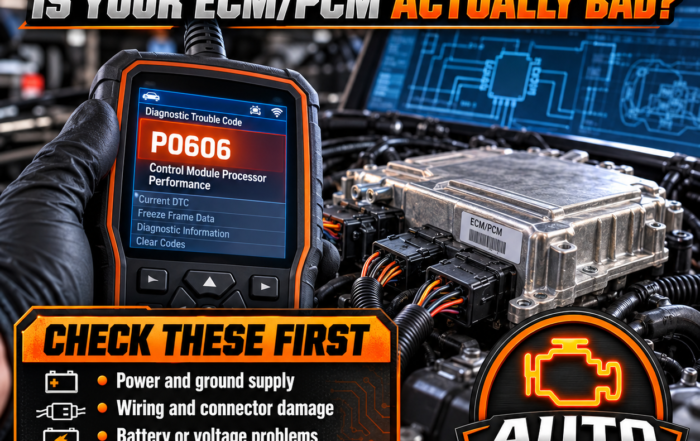
However, an ECU or ECM code does not automatically mean the computer is bad. Similar symptoms can be caused by:
- Wiring faults
- Bad power supply
- Poor ground
- Failed relay
- Sensor issues
- Corroded connector
- Communication network problem
- Programming issue
Before replacing expensive computers, it is important to test the system. These pages explain the difference between related computer issues:
BCM Problems May Also Affect Starting
The body control module, or BCM, controls many body-related electrical functions. Depending on the vehicle, it may also communicate with the ignition, security system, key recognition, lighting, locks, and other modules.
A BCM-related problem may cause:
- No-start or no-crank condition
- Security light staying on
- Key not recognized
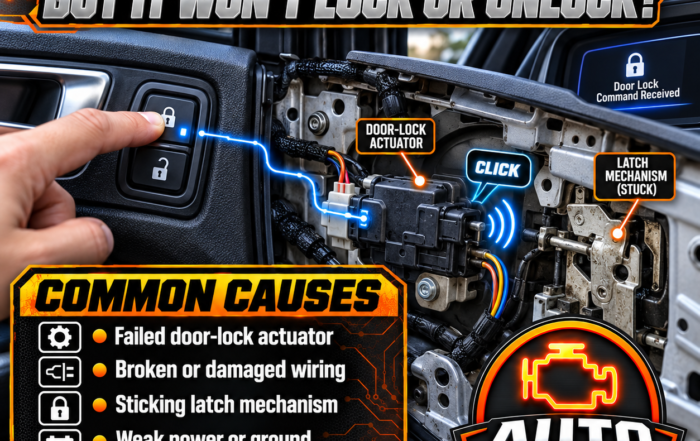
- Power locks acting strangely
- Interior lights staying on
- Exterior lights malfunctioning
- Wipers or accessories acting up
- Communication faults
- Multiple warning lights
- Battery drain
BCM problems can be confusing because they may seem unrelated to starting. But on some vehicles, module communication and security authorization are part of the starting process.
If your no-start problem happens along with lock, lighting, window, or security issues, the BCM repair page may help explain what could be involved.
Security System or Immobilizer Issues
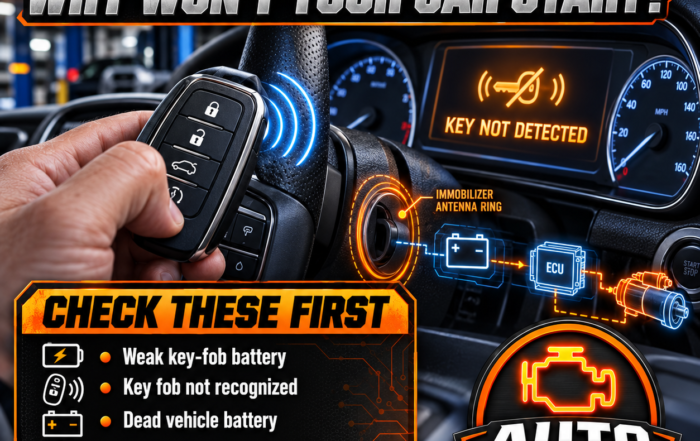
Many modern vehicles use an immobilizer or anti-theft system. If the vehicle does not recognize the key or security authorization fails, the engine may not start.
Security-related starting issues may include:
- Security light flashing
- Key not recognized
- Engine cranks but will not start
- Engine starts then shuts off
- No crank condition
- Remote start not working
- Key fob issues
- BCM or ECU communication faults
Sometimes the issue is the key. Other times, it may involve wiring, the ignition switch, antenna ring, BCM, ECU, programming, or module communication.
Door, Lighting, or Interior Electrical Issues Can Be Clues
Sometimes the no-start problem is not isolated. Other electrical symptoms can help point toward the larger issue.
Pay attention if you also notice:
- Power windows not working
- Door locks not responding
- Interior lights staying on
- Headlights or taillights malfunctioning
- Brake lights not working
- Dashboard lights flickering
- Wipers acting strange
- Accessories staying on after the car is off
These symptoms can point toward body wiring, BCM issues, lighting circuits, or door electrical problems.
Helpful related pages include:
AC, Seats, Steering, and Safety Systems Can Also Point to Electrical Problems
A no-start issue may not directly come from the AC, seat, steering, or safety system, but strange behavior in these systems can show that the vehicle has a broader electrical problem.
Examples include:
- AC controls not responding
- Blower motor not working
- Power seat stuck or not moving
- Power steering warning light on
- Blind spot warning not working
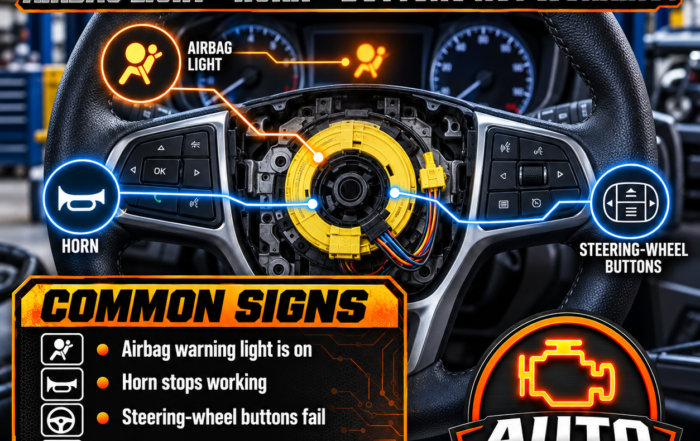
- Airbag or SRS light on
- Multiple systems failing at once
When several systems act up together, it may involve a module, wiring network, low voltage, ground issue, or communication fault.
Related service pages include:
- AC electrical diagnostics
- Power seat electrical repair
- Power steering module repair
- Blind spot monitoring repair
- SRS repair
Questions to Ask Before Replacing Parts
Before replacing the battery, starter, alternator, ECU, ECM, BCM, or sensors, it helps to ask the right questions.
Write down:
- Does the engine crank?
- Does it click once or rapidly?
- Do the dashboard lights turn on?
- Does the security light flash?
- Did the problem happen after a battery replacement?
- Did the problem happen after a jump start?
- Does the problem happen only sometimes?
- Are other warning lights on?
- Are power windows, locks, or lights acting strange?
- Has the vehicle had recent repairs?
- Was there recent water damage or collision damage?
- Did any aftermarket alarm, stereo, or remote start work get done?
These details can help narrow down the starting point for diagnostics.
Why Guessing Gets Expensive
No-start problems can be expensive when parts are replaced without testing. A vehicle may receive a new battery, starter, alternator, relay, sensor, or module and still not start if the real problem is elsewhere.
Guessing can lead to:
- Replacing parts that were not bad
- Missing wiring or ground problems
- Overlooking module communication faults
- Ignoring security system issues
- Replacing an ECU or ECM unnecessarily
- Spending more time and money than needed
Diagnostics do not magically make every repair simple, but they help create a smarter path forward.
What Electrical Diagnostics May Include
Depending on the symptoms, electrical diagnostics may include:
- Battery and charging system testing
- Starter circuit testing
- Fuse and relay checks
- Power and ground testing
- Scan tool communication
- Fault code review
- Sensor data review
- ECU or ECM communication testing
- BCM communication testing
- Security system checks
- Wiring and connector inspection
- Voltage drop testing
- Checking for parasitic draw
- Testing after repairs are made
The goal is to find the cause, not just clear codes or replace the most obvious part.
When Milwaukee Drivers Should Schedule Diagnostics
You should consider electrical diagnostics if:
- Your car will not start
- The engine cranks but will not fire
- You only hear clicking
- The battery keeps dying
- The vehicle starts sometimes but not always
- The security light is on or flashing
- Multiple warning lights are on
- You replaced the battery and the problem came back
- You replaced the starter and the problem came back
- Power locks, lights, windows, or accessories are acting strange
- A scan shows ECU, ECM, BCM, or communication codes
A no-start problem is easier to diagnose when the symptoms are documented clearly. Try to note what happens when you attempt to start the vehicle and whether any other electrical issues appear at the same time.
Final Thoughts
A car that will not start does not always need the first part someone guesses. The issue may be simple, like a weak battery or loose cable, but it may also involve wiring, fuses, relays, sensors, security systems, ECU, ECM, BCM, or module communication.
Common electrical causes of no-start problems include:
- Weak battery
- Corroded battery cables
- Bad ground
- Starter signal problem
- Blown fuse
- Failed relay
- Wiring fault
- Sensor issue
- Security system problem
- ECU or ECM fault
- BCM communication issue
- Module network problem
- Parasitic electrical draw
For Milwaukee drivers, the best next step is to pay attention to the symptoms and avoid replacing parts without a clear diagnosis. If the problem appears electrical, start with auto electrical diagnostics in Milwaukee. If the issue involves vehicle computers or modules, these pages may also help:
For questions about your vehicle, you can also contact Auto Electrical & Airbags at (414) 345-7568.