
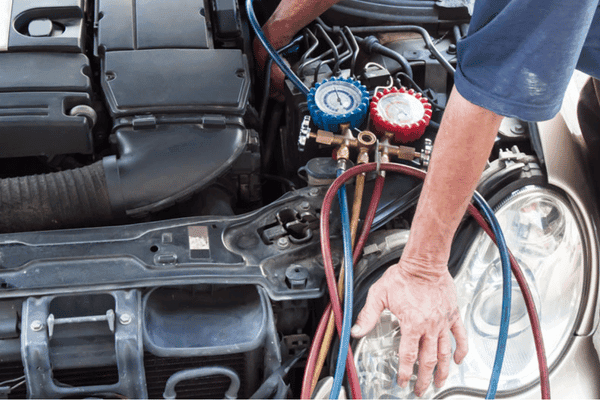
Car AC Electrical Problems We Diagnose in Milwaukee
Car AC electrical diagnostics identify problems involving the wiring, circuits and electronic controls responsible for operating a vehicle’s air-conditioning and climate-control system. Unlike a basic AC recharge, electrical testing determines whether the system is receiving the correct power, ground and computer commands needed to operate the blower motor, control panel, sensors and compressor.
If your AC stops working, the compressor itself is not always the cause. A blown fuse, failed relay, damaged connector, poor ground, faulty pressure sensor or missing compressor command signal can prevent the system from engaging. Airflow problems may also come from a blower motor, blower motor resistor, speed-control module, switch or climate-control module that is not operating correctly.
Because modern vehicle systems communicate through connected electronic modules, the visible AC symptom may begin elsewhere in the electrical system. Our Milwaukee shop uses circuit testing and vehicle-system diagnostics to trace the fault before recommending component replacement. Drivers experiencing problems with multiple electronic systems can also learn about our auto electrical diagnostics and repair in Milwaukee.
We diagnose AC electrical problems at our shop located at 2636 S 32nd St in Milwaukee, Wisconsin. Electrical diagnostics start from $135, with the total diagnostic and repair cost depending on the vehicle, symptoms, circuit accessibility and complexity of the fault.
Signs Your Car May Have an AC Electrical Problem
Common signs of an automotive AC electrical problem include a blower that does not operate, airflow that works only at certain speeds, an unresponsive climate-control panel, intermittent cooling and a compressor that does not engage. Because similar symptoms can also result from refrigerant or mechanical problems, electrical testing is needed to identify the actual cause.
These symptoms do not automatically prove that an expensive AC component needs replacement. Proper car AC electrical diagnostics help isolate the affected circuit and determine whether the fault comes from the component, its wiring or the electronic system controlling it.
AC and Climate-Control Components We Test
Automotive climate-control systems contain electrical components that work together to control cabin airflow, temperature and compressor operation. Depending on the symptoms and vehicle design, our diagnostic process may include testing the following components and circuits:
Testing these parts as a connected system helps prevent unnecessary replacement. For example, a blower motor may appear defective when the actual problem is a failed resistor, damaged connector or missing power supply.
How We Diagnose Car AC Electrical Problems
Car AC electrical diagnosis should identify why the system is malfunctioning before a blower motor, control panel, sensor, module or compressor is replaced. The exact testing process depends on the vehicle and symptoms, but it generally includes the following steps.
1. Confirm the AC or airflow symptoms
We begin by checking how the system responds to the climate-control settings. This may include determining whether the blower operates, whether fan speeds change and whether the compressor receives an operating command.
2. Scan the connected vehicle systems
The climate-control system and related electronic modules may be scanned for stored fault codes, communication errors and sensor readings that can help identify the affected circuit.
3. Check fuses, relays, power and grounds
A component cannot operate without the correct voltage and ground. We inspect the related circuit before concluding that an expensive motor, control panel or module has failed.
4. Test wiring, connectors and control signals
Damaged wires, loose terminals, corrosion and electrical shorts can interrupt AC operation. Circuit testing helps determine where voltage, ground or a command signal is being lost.
5. Identify the cause and recommend the appropriate repair
After the fault is isolated, we explain what was found and which repair is appropriate. The necessary repair may involve wiring, a connector, relay, sensor, switch, blower component or climate-control module.
This test-before-replacement approach helps separate an actual component failure from a problem in the circuit controlling it. It can also reduce the risk of replacing an AC part that was not causing the malfunction.
Is the AC Problem Electrical, Refrigerant-Related or Mechanical?
A car that is not blowing cold air does not automatically have an electrical problem. Automotive AC systems contain electrical controls, refrigerant components and mechanical parts. Proper diagnosis is necessary because different failures can produce similar symptoms.
Our service page focuses on diagnosing the electrical circuits and electronic controls affecting AC and climate-control operation. Testing helps determine whether the symptom originates in the electrical system or whether the vehicle may require additional refrigerant or mechanical AC service.
Car AC Electrical Diagnostics Starting From $135
Car AC electrical diagnostics at our Milwaukee shop start from $135. This is the starting diagnostic rate, not the final repair price. The amount of testing required depends on the vehicle, symptoms, circuit accessibility and whether the problem is constant or intermittent.
A simple fuse, relay or visible connector problem may take less time to isolate than an intermittent wiring fault or a climate-control module that stops communicating only under certain conditions. After testing, we explain the identified fault and the recommended repair before additional work is completed.
All diagnostics and approved repairs are completed at our facility at 2636 S 32nd St, Milwaukee, WI 53215. We serve drivers from Milwaukee and nearby auto electrical repair service areas, including West Allis, Greenfield, Wauwatosa, New Berlin, Franklin, Oak Creek, Cudahy and South Milwaukee.
$135+ Starting Electrical Diagnostic Rate

